When Sheet Inspection Systems for Paperboard Pay Back Through Less Waste
When Sheet Inspection Systems for Paperboard Pay Back Through Less Waste
For a finance team reviewing a capital request, sheet inspection systems for paperboard can look like a quality-control expense with a difficult return to prove. The equipment sits near the press, feeder, delivery section, or inspection station; it does not visibly produce more sheets per hour, form more cartons, or replace an entire production line. That first impression is understandable, but often incomplete.
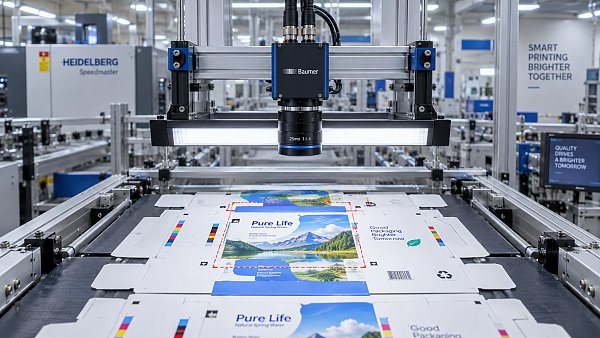
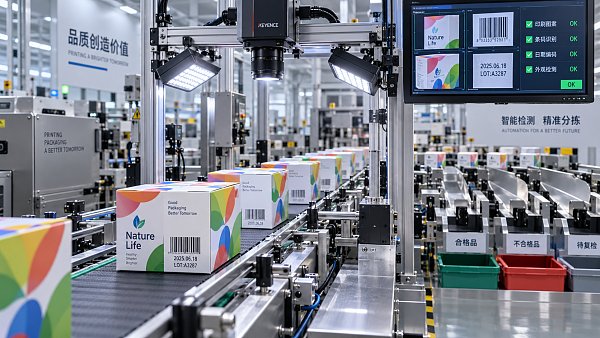
The better question is where a defective sheet is discovered. A print defect found immediately after production may mean one rejected sheet and a quick adjustment. The same defect found after die-cutting, stripping, folding, gluing, packing, and shipment preparation can mean lost board, consumed ink, machine time, labor, packaging materials, and possibly a delayed customer order. Inspection earns its place when it moves defect detection upstream, while the cost of failure is still relatively low.
That distinction matters in both commercial print and paperboard packaging operations. Printed cartonboard, litho-laminated corrugated sheets, display packaging, and branded shipping cases often carry a large amount of value after the base sheet enters the plant. The board itself may be only part of the cost exposure. Converting capacity, customer-specific artwork, barcode requirements, traceability information, and delivery commitments can all raise the cost of letting unacceptable material continue downstream.
Waste is rarely recorded in one place
A common weakness in investment proposals is treating waste as a single scrap percentage from the printing department. In reality, the financial effect is scattered. Production may record waste at press delivery, while converting records a separate loss at the flatbed die-cutter or folder gluer. Customer service carries the cost of an urgent remake. Logistics absorbs an expedited shipment. None of those entries, viewed alone, necessarily explains why the original bad sheet was expensive.
In paperboard work, defects also travel differently depending on the process. A missing graphic element may be apparent to an operator but not caught consistently at speed. A colour variation can become more noticeable after varnishing or under a retailer’s lighting. Register drift may not make a flat sheet unusable, yet it can interfere with die-cut alignment, creasing appearance, foil placement, or the perceived quality of a finished folding carton. Coating streaks, scuffing, hickeys, damaged board edges, contamination, and incomplete variable codes each create their own downstream failure path.
This is why a useful waste review follows the material through the operation rather than stopping at the first reject bin. It should distinguish between:
- start-up and changeover sheets that are expected during normal setup;
- recurring process loss caused by unstable print, registration, coating, or board handling;
- defects detected late, after value-adding conversion stages;
- quality holds where good material is delayed because suspect sheets cannot be isolated quickly; and
- customer-facing costs such as claims, remakes, freight upgrades, or missed delivery windows.
An inspection system will not eliminate every category. It cannot correct poor board storage, worn tooling, incorrect glue settings, or an unstable press by itself. What it can do is identify the onset, frequency, and location of defects with more consistency than intermittent human sampling. That is where the financial case begins.
The value is in containment, not just detection
A vision inspection system is often discussed in terms of camera resolution, defect libraries, lighting, and software functions. Those technical details matter, but they are not the central approval issue. A system only produces an economic result if its detection output leads to a usable production response.
For example, detecting a print register error is helpful only if the machine can alert the operator quickly enough to correct the cause, flag the affected production interval, and prevent questionable sheets from mixing with accepted stock. If rejected sheets simply accumulate at delivery while operators struggle to identify the reason, the investment may add information without reducing loss.
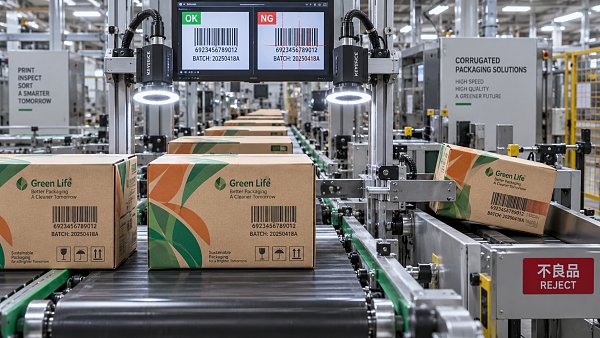
The strongest implementations link inspection to a clear containment routine: alarm thresholds, defined operator actions, batch or stack segregation, supervisor escalation, and a record of what happened. In some lines, the practical requirement is a reject mechanism. In others, particularly where large sheets are stacked for later conversion, reliable marking, stack identification, or production-window traceability may be more useful than automatic ejection. The right choice depends on line speed, sheet handling, defect type, and how material moves to the next process.
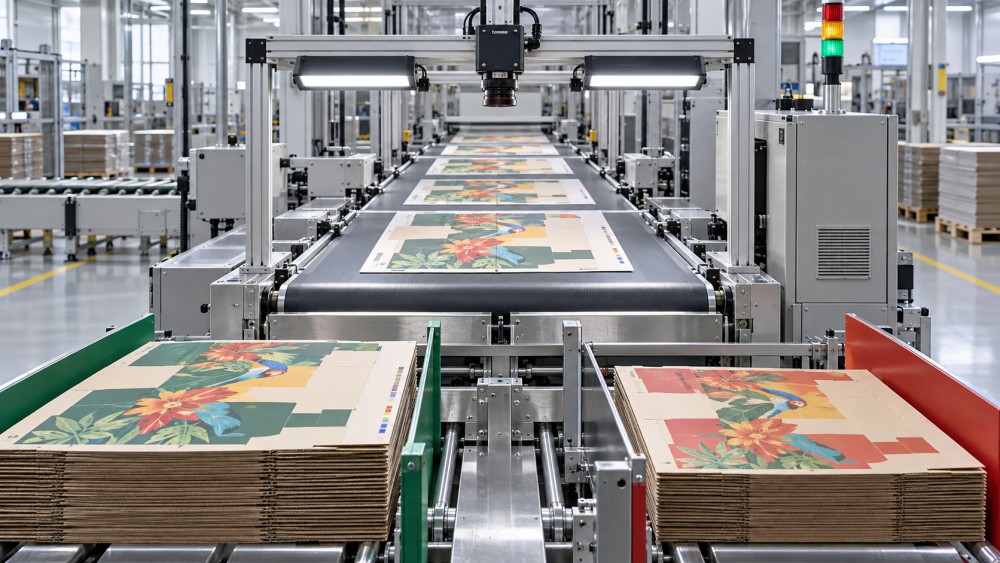
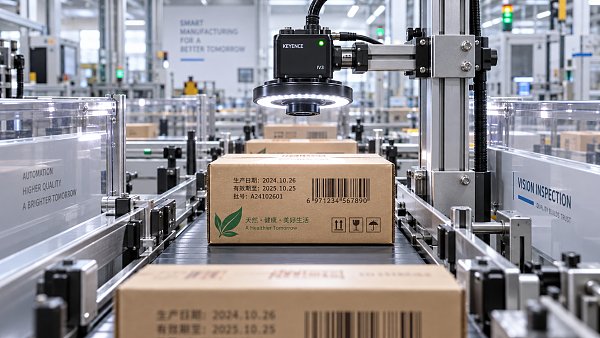
This is also where inspection can improve shipment reliability. When a plant has defensible inspection records and a clear method for isolating suspect material, it is less likely to hold an entire order because one section of production is uncertain. That does not mean every customer requirement can be satisfied by one system. Barcode verification, variable-data checking, print inspection, and board-surface inspection can have different technical needs. A proposal should identify exactly which risks the system is expected to control.
Build the payback model around avoidable cost
The purchase price is only one part of the calculation. Finance should compare the fully installed cost against the annual cost that can reasonably be avoided. “Reasonably” is important: it is better to use conservative operational assumptions than to assign a savings value to every defect the cameras could theoretically see.
A practical model starts with historical evidence. Review quality reports, press logs, waste tickets, conversion rejects, customer complaints, rework records, and urgent freight events. The aim is not to find perfect data; few plants have it. The aim is to establish a credible baseline for losses associated with defects that the proposed inspection configuration can detect and help contain.
The basic calculation is straightforward: annual avoidable loss divided by total investment cost gives a simple payback period. Yet the inputs need discipline. Total investment should include integration, mechanical or electrical modifications, commissioning, operator training, software or support obligations, spare parts where required, and planned downtime for installation. If the system needs a controlled lighting enclosure, additional conveying, or interface work with an existing press or feeder, those items belong in the capital request.
On the savings side, use an adoption factor. A plant may identify a certain amount of historical waste related to print or surface defects, but only a portion may be preventable in the first year. The inspection system may expose process problems that require maintenance, press adjustment, board supplier discussion, or revised job setup before waste actually declines. A conservative model recognises that detection is an enabler, not magic.
Where payback tends to be strongest
The economics are usually more compelling where sheet value increases rapidly after printing, or where a defect can contaminate a large quantity before it is noticed. High-volume repeat work is one example: even a modest recurring defect can become expensive if it persists unnoticed across long runs. Another is short-run, high-mix production, where frequent changeovers raise the risk of wrong artwork, incomplete print, poor registration, or variable-data mistakes. The mechanism is different, but the business case can still be sound because rework disrupts an already tight schedule.
For corrugated packaging plants, inspection should be considered in the context of the entire route. Board quality begins at the corrugator, where paper condition, steam, tension, glue application, bonding, slitting, scoring, cutting, and stacking all affect the sheet delivered to print and conversion. A defect observed after printing may originate earlier. Likewise, a print inspection system installed before die-cutting can protect downstream equipment from processing material that will later be scrapped.
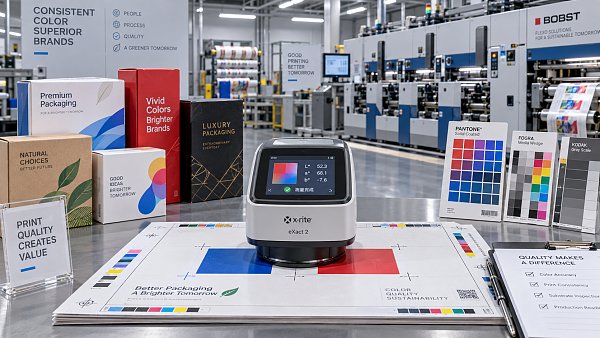
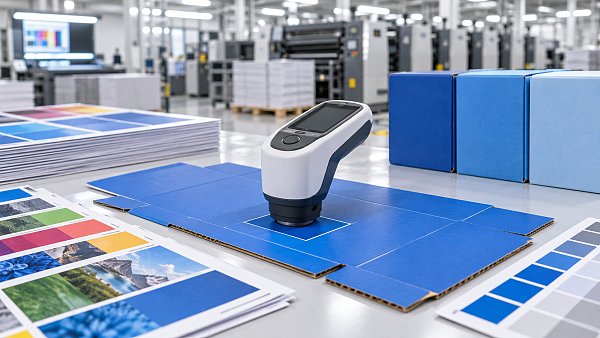
For folding carton and commercial print operations, the critical question is often whether the system can inspect the attributes that matter for a given job mix. Brand-critical colour, fine register, foil position, coating appearance, readable codes, pharmaceutical carton information, and versioned artwork do not present the same inspection challenge. A generic promise of “100% inspection” is not enough. Approval should be tied to demonstrated defect types, substrate range, production speeds, and acceptable false-reject behaviour.
Do not let false rejects quietly erase the savings
A system that rejects too little creates quality risk. One that rejects too much creates a different kind of waste, plus operator distrust. This is especially relevant with natural variation in paperboard texture, recycled-content surfaces, coating gloss, flute shadow, print mottle, and changing illumination conditions. The inspection specification needs to define tolerances that reflect what the customer and production process actually consider unacceptable.
During supplier evaluation, ask for job-relevant trials using representative sheets where possible. Review not only the defects detected, but also how the system distinguishes acceptable variation from a true defect. Ask how recipes are created and maintained when artwork changes, whether operators can understand alarms, how reference images are controlled, and what happens when a camera, light, or communication link fails. A finance approval should not depend solely on a demonstration with ideal samples.
There is also a staffing question. Automation can reduce reliance on constant manual observation, but it does not eliminate process ownership. Someone must review trends, validate exceptional rejects, manage inspection recipes, and act when recurring defects indicate a press, anilox, doctor blade, feeder, board batch, or die-cutting issue. Plants that assign this responsibility clearly usually extract more value than those that treat inspection as an unattended add-on.
Approve the operating model, not only the hardware
The most durable justification for sheet inspection systems for paperboard is not “better quality” in the abstract. It is a documented reduction in avoidable loss at the point where losses are still controllable. That requires a baseline, a technically appropriate inspection scope, a response procedure, and an honest view of integration cost.
For investment teams comparing alternatives, it helps to review the system as part of a wider production chain: corrugated board making, flexographic or offset printing, coating, die-cutting, folder gluing, coding, traceability, and end-of-line handling. This system view is increasingly necessary as packaging plants manage shorter runs, tighter delivery windows, rising paper costs, and more demanding quality records. Platforms such as Global Commercial Print & Corrugated Packaging Intelligence help connect equipment claims with the actual conditions in which packaging factories operate.
Before release of funds, ask one final operational question: if the system finds a defect at full production speed tomorrow morning, who will stop the loss, identify the affected sheets, correct the cause, and prove that acceptable material is moving forward? If that answer is clear, the inspection investment has a credible path to paying back through less waste. If it is not, the plant may be buying cameras when it really needs a better containment process.
Related News
 How to Select an Area Scan Camera for Reliable Print InspectionChoose an area scan camera for print inspection with confidence. Learn how resolution, lighting, speed, and testing affect defect detection—and make a smarter investment.Machine Vision & Coding Fellow
 How to Build a Reliable Compact Vision Sensor Inspection SystemBuild a reliable compact vision sensor inspection system with proven guidance on lighting, triggering, defect detection, and production-ready quality control.Machine Vision & Coding Fellow
 How High Accuracy Spectrophotometers Improve Print Color Controlhigh accuracy spectrophotometers help print and packaging teams detect color drift early, reduce waste, improve approvals, and protect brand consistency across every production run.Machine Vision & Coding Fellow
 How Spectrophotometers for Color Matching Improve Print ConsistencySpectrophotometers for color matching help printers control Delta E, reduce waste, and deliver reliable brand color across every press run.Machine Vision & Coding Fellow
 How Print Inspection Systems Prevent Defects Before ShipmentPrint Inspection Systems help detect print, barcode, color, and coding defects in real time—improving traceability, reducing waste, and preventing costly shipment failures.Machine Vision & Coding Fellow
 Smart Cameras for Inspection That Catch Print Defects in Real TimeSmart camera for inspection solutions catch print defects in real time, verify codes, reduce false rejects, and strengthen packaging quality control.Machine Vision & Coding Fellow