What to Evaluate in Pharmaceutical Carton Inspection Systems Before Purchase
What to Evaluate in Pharmaceutical Carton Inspection Systems Before Purchase
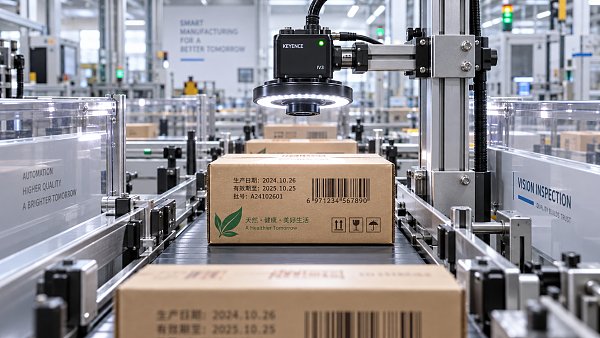
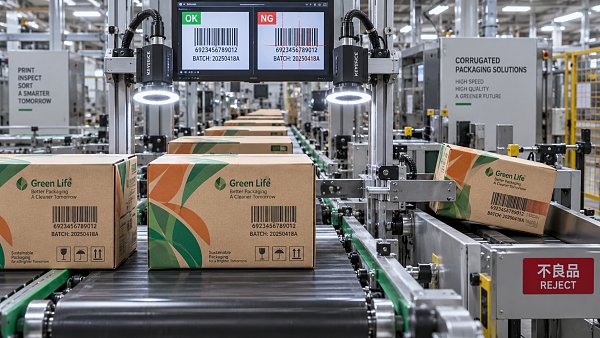
Before buying Pharmaceutical Carton Inspection Systems, it is worth stepping back from the demo screen and asking a harder question: what failure, exactly, are you trying to prevent? In pharmaceutical packaging, inspection is not just about catching a bad print sample. It sits between coding, serialization, carton converting quality, line speed, and regulatory exposure. A system that flags obvious defects but struggles with variable data, folded-carton geometry, or reject confirmation can still leave a plant exposed to recalls, rework, and avoidable downtime.
That is why procurement decisions in this area rarely succeed when based on camera resolution alone. The better buying process looks at line compatibility, code verification logic, data integration, carton handling stability, and the practical impact on OEE. In high-volume environments, even a small mismatch between inspection hardware and real production conditions can become expensive very quickly.
This is also where a broader packaging-machinery perspective matters. CPCS has long focused on the mechanics and production physics behind corrugated lines, flexo presses, die-cutters, folder gluers, and coding and vision inspection. That matters because carton inspection does not operate in isolation. Print registration drift, glue flap variation, vibration, web and sheet transport behavior, and high-speed changeovers all shape whether an inspection system performs well on the factory floor or only in a controlled test.
Start with the actual inspection task, not the brochure category
Different lines buy “carton inspection” for very different reasons. One plant may need reliable barcode and 2D code verification for aggregation workflows. Another may be more concerned with missing text, wrong artwork, color patch deviations, or skewed overprint from late-stage coding. A third may need to confirm leaflet presence, Braille readability, tamper-evidence features, or print quality on glossy and reflective substrates.
If those use cases are not separated early, vendors often respond with a generic “all-in-one” proposal that sounds capable but becomes vague under specification review. A practical purchase checklist should distinguish at least four layers: static print inspection, variable data verification, carton presence/orientation checks, and reject management. These are related, but they are not the same problem, and not every platform handles them equally well.
It is also sensible to map where the system will sit: pre-gluing, post-gluing, before cartoner infeed, after coding, or at a late end-of-line checkpoint. The location changes what the cameras can see, how stable the carton is, and whether detected defects can be removed without disrupting the line.
Speed compatibility is more than a top-speed number
A common procurement mistake is to compare maximum advertised inspection speed with nominal line speed and treat that as sufficient. It usually is not. Pharmaceutical Carton Inspection Systems need to remain reliable during acceleration, deceleration, short-batch changeovers, and varying carton gaps. Cartons do not always arrive at the camera in ideal spacing or perfectly repeatable orientation.
On fast carton lines, image quality depends on lighting design, trigger accuracy, conveyor stability, and the system’s ability to process images without buffering delays. For web-based or sheet-fed packaging operations, CPCS often emphasizes that camera performance cannot be divorced from motion behavior. The same logic applies here: if the transport path introduces flutter, vibration, or inconsistent carton presentation, a theoretically strong vision engine may still produce false rejects or missed defects.
Ask suppliers to explain performance at your working range, not just their peak rating. A line that usually runs below its maximum may still create trouble if the inspection tool is sensitive to product pitch variation or to changes in carton finish.
Serialization and code verification deserve their own review
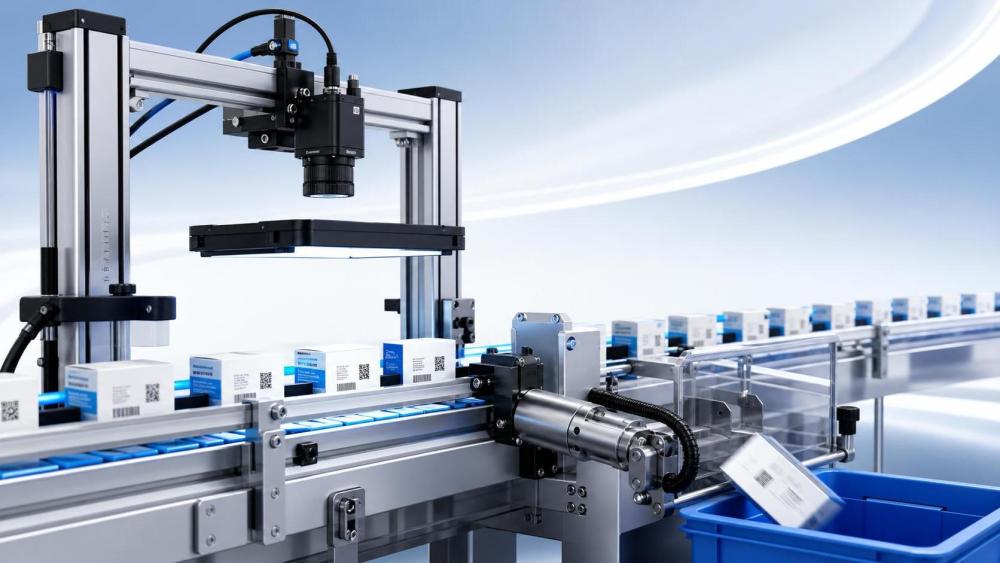
For many buyers, serialization is the single most important reason to invest. In that case, the key question is not whether the system “reads codes,” but whether it can verify the right code, on the right carton, at the right position, with an auditable link to line data. That includes 1D barcodes, DataMatrix codes, human-readable text, batch information, and expiry details where applicable.
You should also examine how the system handles print quality grading, duplicate detection, non-readable codes, and data mismatches. Some systems are strong at simple presence/absence checks but weaker when variable data must be validated against external sources such as serialization management software or line controllers.
This is especially relevant on lines using CIJ, TIJ, laser, or other on-the-fly coding methods. Print quality is affected by substrate absorbency, carton coating, printhead condition, and production speed. In other words, the inspection platform must not only decode symbols but also tolerate normal process variation without lowering quality thresholds to the point where genuine defects slip through.
Compliance readiness should be tested in practical terms
Pharmaceutical packaging buyers do not need abstract promises about compliance. They need to know what records the system creates, how inspection events are stored, whether user access is controlled, and how recipe changes are tracked. The details depend on market and project scope, but in regulated environments audit trail capability, data integrity practices, and validation support are often as important as optics.
This is one area where procurement should involve quality and validation teams early. If a supplier cannot clearly describe documentation support, software version control, change management, and interface behavior, the project risk is higher than it first appears. Claims around compliance should always be checked against your internal standards and the target market’s regulatory expectations rather than accepted as a blanket statement.
CPCS’s work around packaging compliance and traceability in adjacent sectors highlights a useful lesson: equipment decisions increasingly need to account for future documentation burdens, not just current production needs. That is true in pharma, where traceability and inspection records are part of the operational system, not an afterthought.
False rejects, reject confirmation, and line behavior under stress
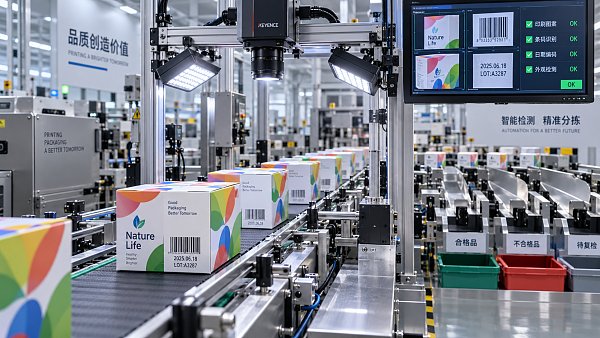
A system that catches every defect in theory but floods the line with false rejects is not protecting productivity. Procurement teams should ask how the system distinguishes between cosmetic variation and critical defects, how thresholds are set, and who can change them. It is also worth examining how rejected cartons are physically removed and whether removal is confirmed.
This sounds basic, yet it is often where projects become troublesome. Reject devices may work well with one carton format and poorly with another. Air blast, pusher, diverter, or mechanical reject methods each have limits depending on speed, carton weight, and spacing. If the reject station cannot reliably remove the target pack, inspection quality on paper does not translate into actual containment.
And when rejects occur in clusters during startup or after a coding disturbance, can the line recover cleanly? That question says more about real-world suitability than a polished demo ever will.
Integration with upstream and downstream equipment matters more than many expect
Inspection performance is shaped by the machines around it. Carton blank quality from printing and converting, crease accuracy from die-cutting, glue application consistency, and folder-gluer setup can all affect how cartons present to the camera. In high-speed packaging, micro-variation becomes visible to vision systems long before it becomes visible to operators.
That is why cross-process understanding matters. CPCS spends much of its analysis on the mechanics of sheet transport, ink transfer, die-cutting precision, and end-of-line handling, because defects are often born upstream. If a vision supplier treats the inspection station as a self-contained island, buyers should be cautious. The stronger vendors usually ask about printing method, substrate finish, converting tolerances, line control architecture, and communication protocols before finalizing the proposal.
Interfaces with printers, serialization software, PLCs, reject bins, and HMI systems should be clarified early. Otherwise, the hidden cost appears later in controls work, validation delays, or operator workarounds.
Operator usability is not a soft issue
Many inspection systems are technically capable but overly dependent on a few trained people. That creates risk during shift changes, turnover, and format expansion. A buyer should look closely at recipe setup, changeover steps, alarm clarity, image review functions, and how quickly operators can understand why a carton failed.
The question is not whether the system has an advanced interface. It is whether the interface helps operators make fewer mistakes under production pressure. In plants running multiple SKUs and frequent artwork revisions, cumbersome recipe management can become a bigger source of error than the print defects the system was purchased to catch.
Evaluate the OEE impact over the life of the line
Inspection is often justified through quality risk, but procurement should also test the OEE logic. How long does setup take? How many reference images are needed? What happens during SKU change? Can the system support rapid cleaning and maintenance? Does it reduce manual sampling or simply add another station that must be managed?
CPCS frequently frames machine investments through material yield and uptime rather than headline features, and that approach is useful here. A better Pharmaceutical Carton Inspection System is not necessarily the one with the most functions. It is the one that catches meaningful defects while staying stable across normal production variation, limiting waste, and avoiding operator workarounds.
The best buying questions are usually specific and slightly uncomfortable
Ask vendors what defect types are difficult for their system. Ask how performance changes with varnished cartons, low-contrast printing, or warped blanks. Ask what happens when two rejects occur close together. Ask how often recipes need adjustment after artwork changes. Ask which interfaces require third-party engineering.
Those questions tend to reveal whether you are looking at a mature production tool or a good presentation. For procurement teams making a selection decision, that distinction matters more than feature density.
A sound purchase decision usually comes down to this: choose the system that fits your real line behavior, your data and compliance needs, and your tolerance for operational complexity. If the supplier can only talk about cameras and software, the evaluation is incomplete. In pharmaceutical cartons, inspection is part optics, part mechanics, part controls, and part discipline. Buy it that way.
Related News
 How to Select an Area Scan Camera for Reliable Print InspectionChoose an area scan camera for print inspection with confidence. Learn how resolution, lighting, speed, and testing affect defect detection—and make a smarter investment.Machine Vision & Coding Fellow
 How to Build a Reliable Compact Vision Sensor Inspection SystemBuild a reliable compact vision sensor inspection system with proven guidance on lighting, triggering, defect detection, and production-ready quality control.Machine Vision & Coding Fellow
 How High Accuracy Spectrophotometers Improve Print Color Controlhigh accuracy spectrophotometers help print and packaging teams detect color drift early, reduce waste, improve approvals, and protect brand consistency across every production run.Machine Vision & Coding Fellow
 How Spectrophotometers for Color Matching Improve Print ConsistencySpectrophotometers for color matching help printers control Delta E, reduce waste, and deliver reliable brand color across every press run.Machine Vision & Coding Fellow
 How Print Inspection Systems Prevent Defects Before ShipmentPrint Inspection Systems help detect print, barcode, color, and coding defects in real time—improving traceability, reducing waste, and preventing costly shipment failures.Machine Vision & Coding Fellow
 Smart Cameras for Inspection That Catch Print Defects in Real TimeSmart camera for inspection solutions catch print defects in real time, verify codes, reduce false rejects, and strengthen packaging quality control.Machine Vision & Coding Fellow