What to Evaluate When Choosing a Carton Ejector Manufacturer
Choosing a carton ejector manufacturer is not mainly a question of buying a mechanism that pushes finished blanks out of a die-cutting or converting process. The real sourcing question is whether the supplier can provide an ejection system that keeps pace with the line, protects carton quality, fits the existing workflow, and can be kept running without excessive labor, waste, or service delays.
For procurement teams, the lowest quotation is often a poor basis for comparison. A carton ejector that causes jams, marks printed surfaces, struggles with lightweight stock, or requires frequent manual adjustment can create costs far beyond its purchase price. The better decision starts with the cartons being produced, the machine it will serve, and the operating conditions the supplier is expected to support.
Start with the actual carton and production process
Before comparing a carton ejector manufacturer, define what the ejector must handle. “Carton” can describe very different products: flat folding cartons, corrugated shipping cases, display packaging, laminated board, coated stock, or printed sheets with demanding surface-quality requirements. Material thickness, stiffness, flute profile, coating, blank size, cut pattern, and stripping complexity all affect how reliably cartons can be separated and discharged.
An ejector designed around rigid, uniform board may not perform well with lightweight cartons that curl, static-prone printed blanks, or mixed job sizes. Similarly, a system that works reliably after a rotary die-cutter may require a different arrangement after a flatbed die-cutter or as part of a folder-gluer delivery section.
Procurement should provide manufacturers with representative job information rather than only a maximum sheet size. Useful information includes the normal and extreme board range, common carton geometries, required output orientation, expected job-change frequency, upstream machine type, available floor space, and whether cartons must proceed directly to counting, bundling, inspection, conveying, or palletizing.
A supplier that asks detailed application questions early is generally more useful than one that responds with a generic model immediately. The goal is not to make the machine specification more complicated; it is to prevent a standard configuration from being placed into a non-standard operating condition.
Check speed compatibility, not just the advertised speed
A carton ejector must work as part of a production system. Its practical value depends on whether it can accept the line’s real output pattern, including short bursts, deceleration, job changes, and imperfect blanks. A high nominal speed has limited value when the ejector becomes the bottleneck during normal production or requires the upstream die-cutter to slow down to avoid pile-ups.
Ask each supplier how the system synchronizes with the upstream equipment. The answer should cover signal exchange, speed tracking, timing adjustment, emergency-stop behavior, and what happens when cartons arrive unevenly. If the ejector will feed an automated downstream process, confirm how it maintains spacing, direction, and stack consistency.
There is also a difference between processing speed and usable throughput. Usable throughput includes the stoppages created by jams, manual clearing, adjustment after a changeover, and rejected cartons. A manufacturer should be able to explain how its design manages the conditions that interrupt flow: warped blanks, incomplete stripping, variable carton weight, static, dust, or inconsistent feeding from the preceding machine.
For plants handling a narrow product range in long runs, a simpler ejector can be appropriate. For converters managing short jobs and frequent order changes, fast and repeatable adjustment usually has greater value than an impressive maximum-speed claim.
Evaluate carton handling quality at the discharge point
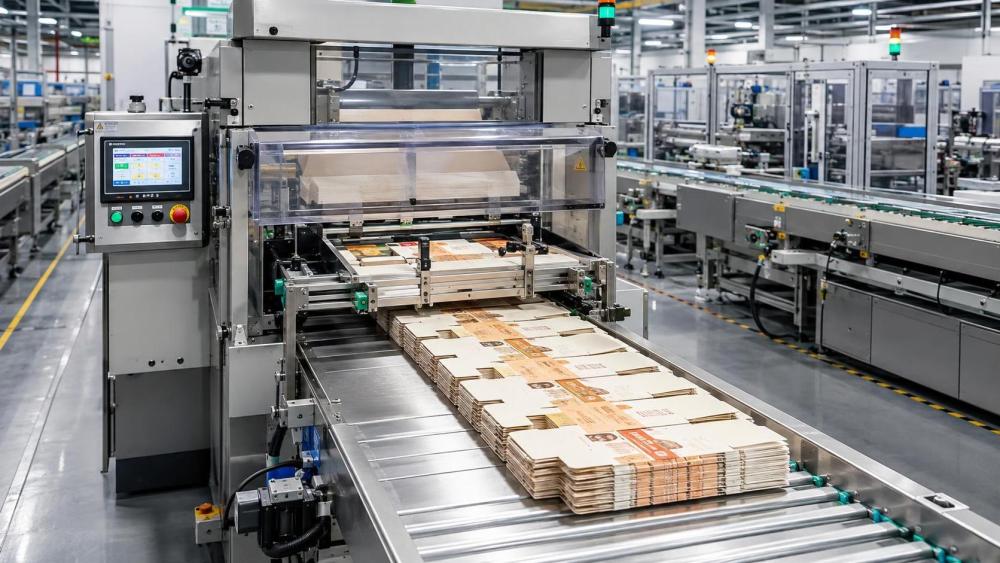
The ejector is often treated as a secondary process because it operates after cutting or stripping. That is a mistake when the plant produces printed cartons, premium retail packaging, or blanks that will move directly into folding and gluing. Poor handling can damage edges, disturb stacks, scuff a printed surface, or send cartons forward in an orientation that creates downstream interruptions.
Ask how the manufacturer controls the ejection force and contact points. The equipment should separate and transfer cartons with enough consistency to prevent jams, but without excessive impact. This becomes more important with coated board, foil-stamped material, window-patched cartons, delicate creases, and cartons with narrow structural features.
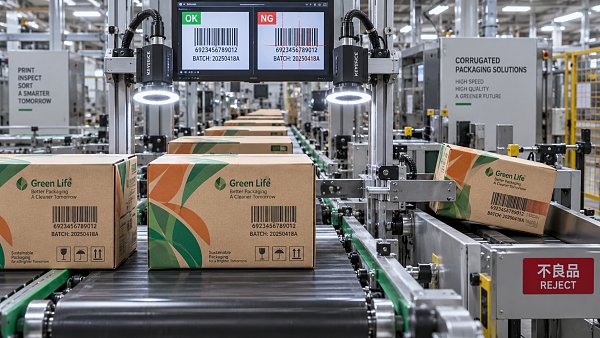
Stack formation deserves the same attention. If operators must repeatedly straighten discharged cartons before bundling or loading the next machine, the apparent automation gain may be overstated. Review how the ejector manages overlap, stack height, delivery alignment, and accumulation. Where visual quality or traceability is important, consider whether the discharge layout leaves a practical point for inline inspection or code verification.
Compare the level of automation against the plant’s real labor problem
Automation options can include automatic size adjustment, recipe storage, counting, batch separation, stack transfer, conveyor integration, fault alarms, and communication with production management systems. These features are not automatically necessary. Their value depends on how the plant operates.
A factory with stable, repeated carton formats may gain little from extensive automatic adjustment. It may be better served by a durable mechanical design with straightforward settings and easy access for operators. By contrast, a plant producing many short runs may benefit from recipe-based settings and guided changeover because the recurring cost is not only labor time. It is also the risk of incorrect setup, inconsistent discharge, and wasted material while settings are corrected.
When reviewing automation, ask a practical question: which manual task will this function remove, and what happens if the function fails? A useful automation feature should reduce a repeatable source of delay or error. It should not create a dependency on proprietary software or complex service intervention for routine adjustments.
Maintenance design affects total cost more than buyers expect
Carton ejectors operate in environments with paper dust, adhesive residue, vibration, and frequent changeovers. Designs that are difficult to clean, lubricate, inspect, or reset can gradually increase downtime even when the core mechanism is reliable.
During supplier evaluation, inspect access to wear components, belts, guides, sensors, pneumatic parts, and adjustment points. Ask which components are expected to need regular replacement and whether they can be changed by in-house maintenance staff. The important issue is not whether a component ever wears; all moving equipment has wear parts. It is whether routine service can be planned and completed without turning a small issue into a long production stoppage.
Spare-parts planning should be discussed before the order is placed. A carton ejector manufacturer should provide a clear recommended spare-parts list, identify critical components, and explain lead times for non-stock items. Buyers should distinguish between common industrial components and proprietary assemblies. Proprietary parts are not necessarily a problem, but they raise the importance of supplier inventory, documentation, remote diagnostics, and service responsiveness.
Assess the manufacturer, not only the machine
The right supplier relationship matters because integration and commissioning determine whether an ejector delivers its promised performance. Evaluate how the manufacturer handles application review, layout confirmation, installation support, operator training, and acceptance criteria.
Acceptance criteria should describe more than “machine runs successfully.” They should reflect the buyer’s actual jobs: materials, carton formats, output expectations, discharge quality, changeover requirements, and interface conditions. Clear criteria reduce disagreements when the equipment arrives at the plant and make it easier to identify whether a problem comes from the ejector, upstream output, material variability, or an unprepared downstream process.
Request a proposed layout showing access space, guarding, operator positions, maintenance clearance, electrical and pneumatic connections, and downstream handoff. A compact machine footprint can look attractive in a quotation but become costly if maintenance access is poor or material flow forces unnecessary handling.
Safety should be evaluated as part of usability. Guards, interlocks, emergency stops, safe clearing procedures, and access points must work with normal production tasks. An arrangement that requires operators to bypass a guard or reach into a congested discharge area to clear minor faults is likely to create both production and safety risk.
Use a cost model that reflects the operating reality
Purchase price is only one line in the comparison. A more useful commercial review considers the cost drivers that follow installation:
- Expected labor required for feeding, clearing, stacking, and quality correction.
- Lost production time caused by adjustment, jams, and routine maintenance.
- Waste from damaged, misaligned, or poorly separated cartons.
- Consumables and wear parts, including their expected availability.
- Utility requirements, controls complexity, and training needs.
- Installation work, line modifications, guarding, conveyors, and commissioning support.
- The effect on downstream efficiency, especially folder-gluer, bundling, and palletizing operations.
Do not assign artificial precision to these items. The purpose is to compare the likely operating burden of each option using the plant’s own production records and staffing model. A higher initial investment can be justified when it removes a recurring source of interruptions. On the other hand, an advanced configuration may not pay back when production volume is low or product variation is limited.
Questions that expose weak proposals
Supplier quotations often look comparable because they list similar basic components. The differences become clearer when procurement asks operational questions:
- Which carton types or board conditions are outside the recommended application range?
- How is ejection timing adjusted during a job change, and can operators repeat the setting reliably?
- How does the system react to a misfed or partially stripped carton?
- What adjustments are manual, and which can be stored or automated?
- What maintenance tasks are expected during normal operation?
- Which spare parts should be held on site to avoid extended downtime?
- What information is required from the existing die-cutter, folder gluer, or conveyor controls for integration?
- Who is responsible for site acceptance, training, and support after commissioning?
Vague answers should be treated as a commercial and technical risk. A credible manufacturer does not need to promise flawless operation under every condition; it should be able to define limits, explain the machine’s behavior, and identify what is needed for stable performance.
Make the comparison around line fit
A carton ejector is rarely a standalone investment. Its value is created by how it improves the connection between converting, finished-carton handling, and end-of-line workflow. This is why equipment evaluation should involve production, maintenance, quality, and automation personnel alongside purchasing.
For buyers reviewing broader converting and packaging automation projects, resources such as Global Commercial Print & Corrugated Packaging Intelligence (CPCS) can help frame the ejector within the full production chain. Die-cutting accuracy, stripping performance, delivery stability, inspection needs, folder-gluer flow, and palletizing requirements all influence the specification that makes commercial sense.
Choose the supplier whose proposal fits the cartons, output pattern, operator capability, maintenance capacity, and existing line controls. That approach produces a more reliable decision than selecting solely on price, nominal speed, or a long automation feature list.
Related News
 How to Select an Area Scan Camera for Reliable Print InspectionChoose an area scan camera for print inspection with confidence. Learn how resolution, lighting, speed, and testing affect defect detection—and make a smarter investment.Machine Vision & Coding Fellow
 How to Build a Reliable Compact Vision Sensor Inspection SystemBuild a reliable compact vision sensor inspection system with proven guidance on lighting, triggering, defect detection, and production-ready quality control.Machine Vision & Coding Fellow
 How High Accuracy Spectrophotometers Improve Print Color Controlhigh accuracy spectrophotometers help print and packaging teams detect color drift early, reduce waste, improve approvals, and protect brand consistency across every production run.Machine Vision & Coding Fellow
 How Spectrophotometers for Color Matching Improve Print ConsistencySpectrophotometers for color matching help printers control Delta E, reduce waste, and deliver reliable brand color across every press run.Machine Vision & Coding Fellow
 How Print Inspection Systems Prevent Defects Before ShipmentPrint Inspection Systems help detect print, barcode, color, and coding defects in real time—improving traceability, reducing waste, and preventing costly shipment failures.Machine Vision & Coding Fellow
 Smart Cameras for Inspection That Catch Print Defects in Real TimeSmart camera for inspection solutions catch print defects in real time, verify codes, reduce false rejects, and strengthen packaging quality control.Machine Vision & Coding Fellow