What to Ask an Area Scan Camera Supplier Before You Buy
It often starts with a practical problem on the production floor: the inspection system misses a print defect, a code cannot be read consistently, or a machine builder says the camera is “compatible” but the integration team still spends days resolving trigger, lighting, or software issues. In packaging and printing environments, that kind of mismatch rarely stays small. It can delay installation, create extra setup work, and turn a straightforward purchase into a longer and more expensive project.
Many buying decisions around machine vision go wrong for a simple reason: the camera is treated like a standard catalog component instead of part of a working inspection process. If you are comparing an area scan camera supplier, the useful questions are not only about resolution and price. You need to understand whether the supplier can support your actual application, fit into your existing control architecture, and keep the line running when something needs adjustment later.
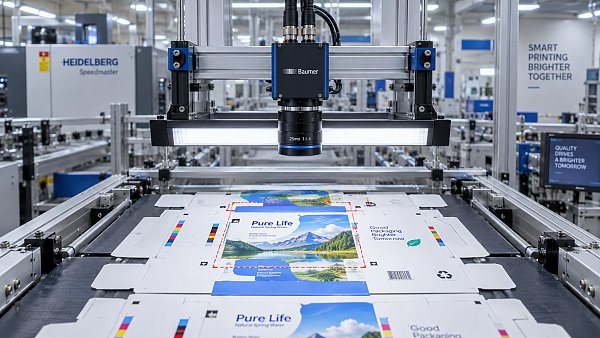
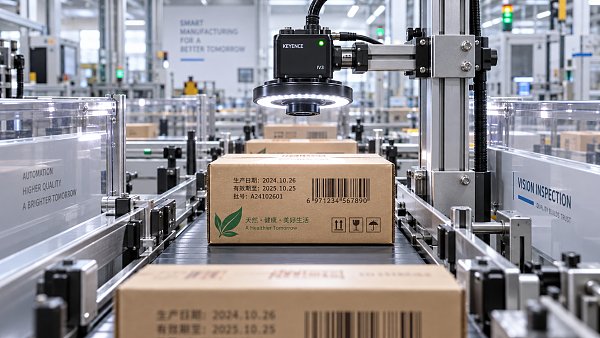
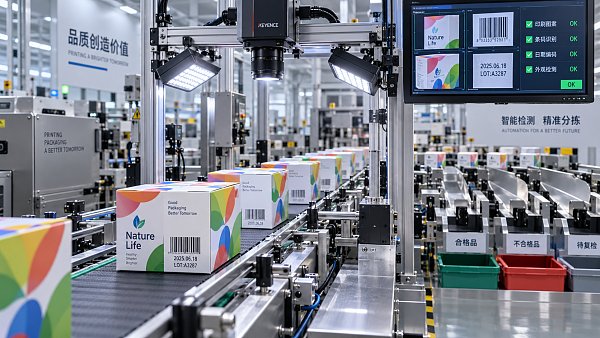
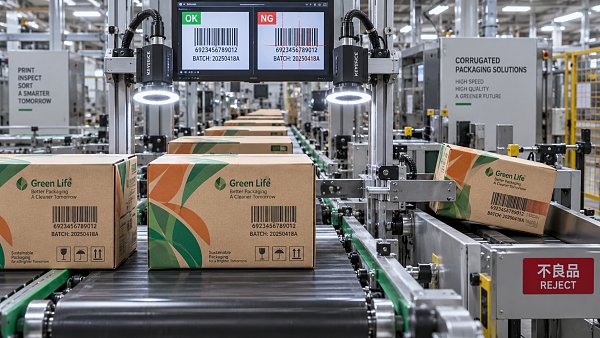
In corrugated packaging, commercial printing, converting, and factory automation, area scan cameras are commonly considered for print inspection, code reading support, sheet or carton positioning, registration verification, defect detection, and traceability tasks. On paper, many products can appear similar. In operation, small differences in interface stability, lens support, lighting knowledge, software tools, and service responsiveness can matter much more than a headline specification.
Start with the failure point, not the catalog page
Before speaking to any supplier, it helps to define the problem in production terms. Are you trying to detect missing print on a moving carton? Verify a variable code after inkjet marking? Check die-cut alignment? Confirm label presence? A surprising number of purchase discussions stay too general. The result is a quote built around a camera model, not around the inspection condition.
A better starting point is to ask the supplier to discuss your line conditions in detail. That usually includes product size variation, web or sheet speed, trigger method, working distance, field of view, motion stability, available lighting space, dust conditions, expected defect types, and the pass/fail decision logic. If a supplier moves too quickly to a model recommendation without asking these basics, that is already useful information.
The point is not to demand a perfect application study in the first call. It is to see whether the supplier thinks in terms of image acquisition quality and line integration, rather than only unit sales.
Questions that reveal whether the supplier understands your application
One of the most important questions is: What assumptions are behind your recommendation? This forces clarity. Some cameras perform well only if lighting is controlled tightly. Others may need a specific shutter mode, interface bandwidth, or exposure range to avoid blur or inconsistent detection. If the supplier cannot explain the operating assumptions, you may later discover hidden dependencies during installation.
Another useful question is: Have you supported applications with similar materials and surface behavior? Packaging lines often deal with reflective coatings, matte kraft, printed varnish, textured board, or variable ink density. These surfaces affect image quality more than many buyers expect. A supplier that understands paper-based packaging or print inspection is more likely to discuss practical issues like glare, contrast loss, dust, and changing substrate appearance across jobs.
It also helps to ask: Which part of the solution is most likely to limit performance? An honest answer may point to lighting, optics, mounting rigidity, encoder accuracy, or software thresholds rather than the camera itself. That kind of answer is usually more valuable than broad claims about “high performance.”
Do not separate camera selection from lens, lighting, and motion
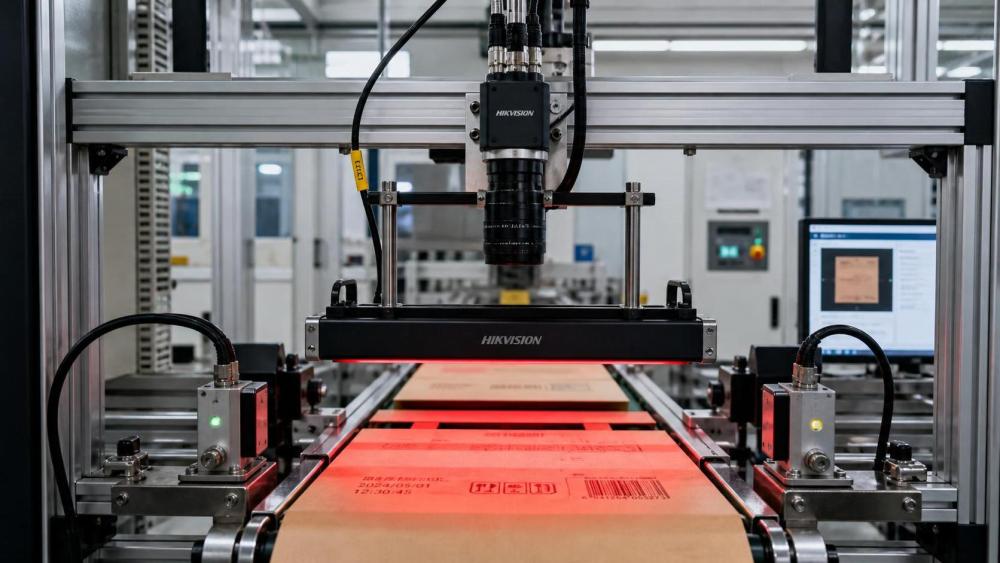
In many projects, the camera is purchased first and the rest is handled later. That sequence causes trouble. An area scan camera only captures what the optical setup allows it to see. If the supplier treats the lens and lighting as someone else’s problem, you may end up with enough pixels on paper but not enough usable contrast in operation.
Ask whether the supplier can advise on focal length, distortion concerns, depth of field, exposure timing, and lighting geometry. You do not necessarily need them to sell every component, but you do need them to understand how these parts interact. For example, a camera chosen for a wide field of view may still fail if the lens cannot hold edge clarity at the needed working distance. A fast line may require shorter exposure, which then demands stronger or better-directed illumination.
For moving sheets, cartons, or printed substrates, motion blur should be discussed early. Ask what line speed assumptions the recommendation is based on, and whether the proposed setup has enough margin for speed variation. If inspection quality depends on a narrow speed window, that should be known before purchase.
Interface and integration questions that save time later
One common mistake is to confirm that a camera has the “right interface” and assume integration will be simple. In practice, compatibility means more than GigE, USB, or another connection standard. It involves driver support, SDK maturity, PLC communication strategy, trigger handling, file management, industrial PC requirements, and whether your software team can work with the provided tools without unnecessary custom work.
Ask the supplier which control environments they commonly support and what integration documentation is available. If your machine or plant already uses specific vision software, PLC brands, or industrial computers, ask directly whether the camera has been used in that environment before. Not as a proof of superiority, but as a practical check on engineering risk.
It is also worth asking about synchronization. Can the camera work reliably with external triggers, encoders, strobe lighting, or multiple camera setups? If your inspection process depends on precise timing, the supplier should be able to explain expected behavior under real production conditions, including latency or frame handling issues that may affect reject decisions downstream.
When support quality matters more than a lower unit price
For procurement, price pressure is real. But with machine vision, the lowest quoted camera cost can become the highest project cost if support is weak. This is especially true when the camera is only one part of a line retrofit or a new inspection station that must go live on a production schedule.
Ask the supplier what support is available before and after delivery. That includes application review, sample image evaluation, setup guidance, firmware updates, troubleshooting process, spare unit availability, and expected response path when the line is down or image quality changes after installation. Some suppliers are strong in product distribution but less effective when an issue needs diagnosis across optics, software, wiring, and mechanical mounting. Others are better prepared for that kind of field problem.
A practical question here is: If the image quality is unstable after installation, what will you ask us to check first? A capable supplier usually has a structured troubleshooting approach. They may ask about exposure, gain, light angle, mounting vibration, trigger signal quality, line speed fluctuation, or contamination on the protective window. A vague answer is a warning sign.
Ask about changeover conditions, not just ideal conditions
Printing and packaging plants rarely run one stable product all day. Job changes, substrate differences, artwork variation, code content changes, and operator adjustments are normal. A camera that performs well in a fixed demo setup may become difficult in production if every format change requires manual rework or new tuning by a specialist.
That is why you should ask how the recommended camera behaves across variable conditions. Does the supplier expect frequent parameter changes? Can exposure or gain be adjusted by recipe? Are there limitations when switching between different carton sizes or print layouts? If multiple SKUs are involved, ask what must be revalidated during each changeover.
In packaging automation, long-term usability often depends less on maximum image quality and more on repeatability under routine operational changes. A supplier who understands this will speak about setup robustness, not just peak performance.
Cost questions that go beyond the purchase order
When comparing an area scan camera supplier, procurement usually receives visible numbers first: camera price, accessory price, and shipping. Those matter, but they are only part of the cost picture. It is worth asking what else is likely to be required for a working system: lens, lighting, cabling, power supply, mounting hardware, software licenses, processing hardware, installation time, and spare unit planning.
You should also ask what ongoing costs may appear later. Are there paid software upgrades? Is the SDK stable over time? Will a discontinued model create redesign work? Are replacement units expected to maintain compatibility with your application settings? If your inspection system will be tied to production reporting or traceability workflows, even a minor hardware change can create extra engineering work later.
Another practical issue is training. If operation or maintenance depends on a few advanced settings, ask whether the supplier provides clear documentation for daily use, not only engineering manuals. In real factories, stable operation often depends on whether line personnel can recognize and correct simple issues quickly.
Signs that a recommendation may be too generic
Some proposals look efficient because they are brief, but brevity can hide risk. Be cautious if the recommendation does not mention field of view, object speed, lighting assumptions, mounting position, image processing environment, or expected defect characteristics. These omissions usually mean the quote is based on partial information.
Also be careful when every application receives the same camera family recommendation. Standardization can be useful, especially for spare parts and maintenance, but over-standardization can force unsuitable compromises. A carton code verification task, a print registration check, and a defect inspection station may not need the same image performance or the same support model.
If a supplier spends most of the discussion on sensor resolution but little on integration, that can be another sign of a generic sales approach. In production, inspection reliability often depends on the total imaging setup and the way the camera fits into the machine cycle.
A better way to compare suppliers during evaluation
Instead of asking only for a quotation, ask each supplier to respond to the same short application summary. Keep it practical: product type, speed range, inspection task, mounting limits, existing control system, and any known environmental issues. Then compare not just the model offered, but the quality of the questions they ask back.
Useful comparison points include how clearly they define assumptions, whether they identify technical risks early, how specific their integration guidance is, and whether they distinguish between the camera requirement and the total imaging requirement. This method often reveals more than brochures do.
If sample imaging is possible, ask what the supplier needs in order to judge feasibility. A serious response may include sample parts, defect examples, speed conditions, target feature size, and lighting constraints. Even if you are not running a formal test, the request itself shows whether the supplier understands what has to be validated before a purchase decision.
Questions worth bringing into the final buying discussion
By the time you narrow your options, the conversation should become more direct. Ask which factors could cause the proposed camera to underperform in your line. Ask how model changes are managed if the original camera becomes unavailable. Ask what spare strategy they recommend. Ask how quickly support can move from product-level advice to application-level troubleshooting if the issue is not obvious.
It is also reasonable to ask what they need from your side for the project to go smoothly. Good suppliers usually ask for stable mechanical mounting, proper cable routing, controlled lighting conditions, access to sample images, and clear acceptance criteria. That is not a burden; it is often a sign that they are trying to prevent avoidable problems.
Common buying questions
Should I choose based on the highest resolution available?
Not automatically. Resolution matters only in relation to feature size, field of view, optics, motion, and processing needs. Buying more pixels than the application can use may increase cost and data load without improving inspection stability.
Is it enough if the camera works with our software platform?
No. Software compatibility is important, but stable triggering, lighting coordination, mounting, and operator usability are just as important. Integration success depends on the whole inspection chain.
Do I need a supplier with packaging industry experience?
Not in every case, but experience with print, paper surfaces, coatings, and production variability is often helpful. It can reduce the risk of overlooking image quality issues that are common in these environments.
When is a lower-priced offer still a good choice?
If the technical assumptions are clear, support is credible, and the camera fits your integration environment without added engineering risk, a lower-priced option may be reasonable. The concern is not low price itself, but low price paired with weak application support.
Buying a camera for inspection is rarely just a component purchase. It is a decision about image reliability, installation effort, changeover practicality, and service burden over time. The best conversations with an area scan camera supplier usually feel less like a sales pitch and more like a careful review of line conditions, constraints, and failure risks. If you ask for that level of clarity before ordering, you are far less likely to discover the real cost of the purchase after the system is already on the machine.
Related News
 How to Select an Area Scan Camera for Reliable Print InspectionChoose an area scan camera for print inspection with confidence. Learn how resolution, lighting, speed, and testing affect defect detection—and make a smarter investment.Machine Vision & Coding Fellow
 How to Build a Reliable Compact Vision Sensor Inspection SystemBuild a reliable compact vision sensor inspection system with proven guidance on lighting, triggering, defect detection, and production-ready quality control.Machine Vision & Coding Fellow
 How High Accuracy Spectrophotometers Improve Print Color Controlhigh accuracy spectrophotometers help print and packaging teams detect color drift early, reduce waste, improve approvals, and protect brand consistency across every production run.Machine Vision & Coding Fellow
 How Spectrophotometers for Color Matching Improve Print ConsistencySpectrophotometers for color matching help printers control Delta E, reduce waste, and deliver reliable brand color across every press run.Machine Vision & Coding Fellow
 How Print Inspection Systems Prevent Defects Before ShipmentPrint Inspection Systems help detect print, barcode, color, and coding defects in real time—improving traceability, reducing waste, and preventing costly shipment failures.Machine Vision & Coding Fellow
 Smart Cameras for Inspection That Catch Print Defects in Real TimeSmart camera for inspection solutions catch print defects in real time, verify codes, reduce false rejects, and strengthen packaging quality control.Machine Vision & Coding Fellow