What Drives Inspection Camera Price and Which Features Matter Most
It often starts with a simple purchasing question: two inspection cameras appear similar on paper, yet the quoted price gap is much larger than expected. One offers higher resolution, another promises smarter defect detection, and a third looks affordable until lighting, software, and installation are added. In printing and packaging environments, that uncertainty is not a minor budgeting issue. If the wrong camera is selected, defects may slip through, false rejects may interrupt production, or a system may struggle to keep up with the actual line speed once it is installed.
This is why understanding inspection camera price is less about asking for the lowest quote and more about figuring out which features are truly tied to production risk. In high-speed corrugated, folding carton, coding, and print inspection work, the camera is only one part of a larger quality decision. Buyers who compare price without comparing application fit often end up paying twice: once at purchase, and again through downtime, rework, paper waste, or a second upgrade.
A common mistake is to think the camera body alone determines cost. In reality, suppliers are often pricing a mix of imaging hardware, lens requirements, lighting compatibility, processing capability, software functions, mounting constraints, environmental protection, and service expectations. That is why two proposals both described as “inspection camera systems” can differ so much even before integration begins.
Where the confusion usually begins
Many lines do not need the same kind of inspection, even when they sound similar in meetings. Checking for a missing barcode on a pharmaceutical carton is different from spotting faint print voids on a flexo sheet, and both are different again from monitoring color registration drift on a fast-moving web. If the problem is not defined first, price comparison becomes meaningless.
One practical way to sort this out is to start from the defect that matters most operationally. Is the concern code presence, code readability, print registration, color consistency, missing text, die-cut position, glue pattern verification, or full-surface print quality? The answer changes the required camera type and, with it, the cost structure.
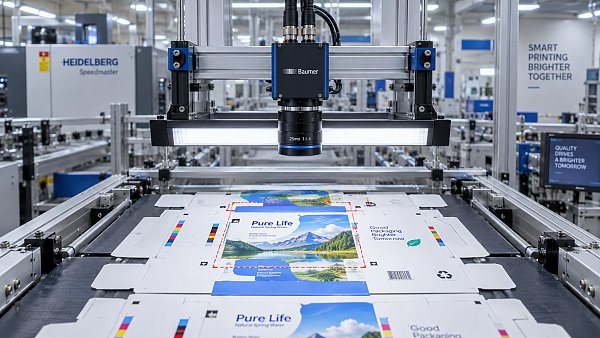
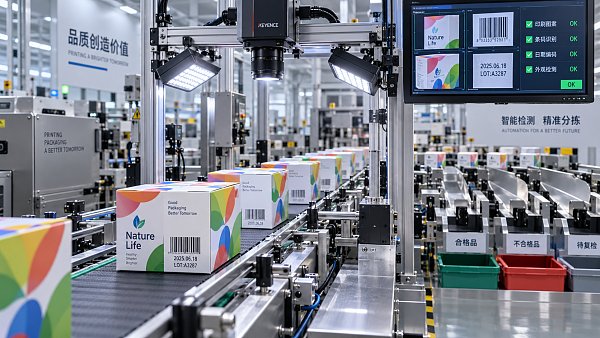
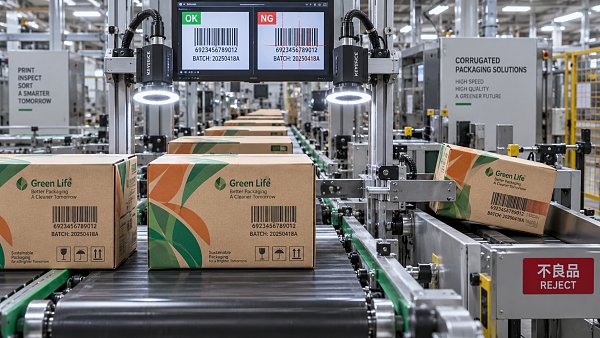
For example, some applications can work with area-scan imaging because the product stops or presents a stable field of view. Others need line-scan cameras because the material is moving continuously at high speed and defects must be captured across the full width of the web. Once motion behavior changes, so do processing load, lighting design, triggering demands, and storage requirements. That is one reason inspection camera price can rise quickly in fast-line applications.
Features that usually have the biggest effect on price
Resolution is one of the first things people look at, but it is often misunderstood. Higher resolution can help detect smaller defects or verify fine print, yet paying for more pixels than the application can use does not improve inspection. If a carton line only needs to confirm the presence of a bold code in a controlled viewing area, extreme resolution may add cost without adding useful detection reliability. On the other hand, if the goal is to catch tiny defects at high speed across a wide area, low resolution may create blind spots that no software can fix later.
Speed capability matters just as much. A camera that performs well in a lab or on a slower machine may fail in real production if exposure time, frame rate, or data transfer cannot keep pace with the line. In corrugated and commercial printing environments, image quality must hold up while material is moving fast and vibration is present. Paying more for speed is not just buying performance; it is reducing the chance of motion blur, missed events, and unstable inspection results.
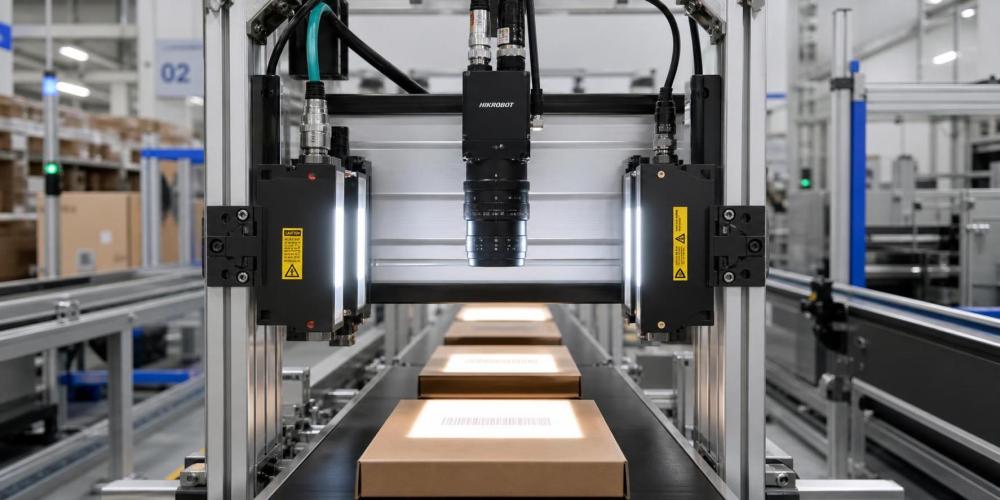
Then there is lighting, which is frequently underestimated during budgeting. Good inspection depends on repeatable contrast. Some defects are easier to see with backlighting, others with angled illumination, diffuse light, strobe timing, or specialized wavelengths. A lower-priced camera can become an expensive disappointment if the lighting strategy is weak. In many real-world setups, the lighting package and mechanical arrangement are as important as the camera itself.
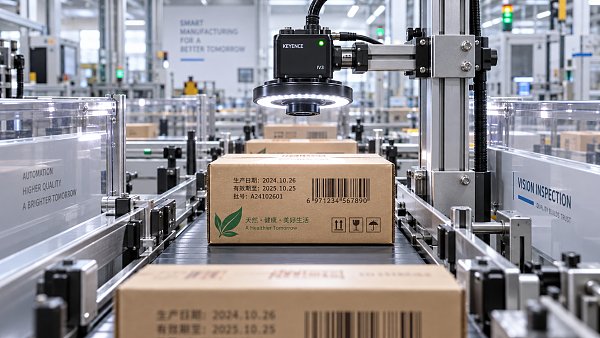
Processing and software are another major driver. Basic image capture costs less than defect classification, OCR/OCV verification, code grading, pattern matching, or AI-assisted anomaly detection. Buyers sometimes ask why software licenses or embedded processors add so much to the quote. The answer is that the system is not simply taking pictures; it is making pass/fail decisions at production speed. The more complex the decision, the more value sits in the computing layer.
Environmental durability also changes price in ways that are easy to overlook. Dust, heat, vibration, washdown requirements, and narrow mounting spaces all affect enclosure design and hardware selection. In packaging plants, especially around corrugators, die-cutters, folder gluers, and coding stations, a camera that survives stable office conditions is not enough. Industrial-grade reliability costs more up front because it is built to survive a harsher operating reality.
The expensive features that may not matter in every line
Not every premium option deserves a place in the specification. This is where purchasing decisions get difficult, because brochures tend to present advanced features as universally necessary.
One example is AI defect detection. It can be valuable when defect types vary, when subtle print anomalies are hard to define with fixed rules, or when there is a need to sort acceptable variation from actual faults. But if the task is straightforward—such as confirming presence or absence of a printed code in a controlled location—traditional rule-based inspection may be easier to validate and maintain. Paying extra for AI only makes sense when the inspection challenge really needs it.
Another example is ultra-high resolution across the full field. It sounds safer to buy the maximum specification, yet a system overloaded with unnecessary image data can create heavier processing demands, longer setup time, and more difficult tuning. If the line does not benefit from that level of detail, the premium becomes hard to justify.
Advanced analytics and data retention are similar. Some operations need traceability, image archiving, audit support, and integration with line management systems. Others only need live reject decisions and basic event logging. The right choice depends on process risk, compliance expectations, and how quality information will actually be used after capture.
Looking at total cost instead of camera cost
When buyers ask about inspection camera price, the more useful question is often: what will this system cost to own, support, and trust over time? A lower purchase price can still produce a higher total cost if the setup is fragile, if recipe changes take too long, or if operators constantly override the system because it rejects too many good products.
This matters a great deal in print and packaging. A vision system that cannot maintain stable thresholds through substrate changes, ink variation, vibration, or shift-to-shift adjustment may generate hidden losses. Those losses do not always appear in the quotation stage, but they show up later in wasted material, reinspection work, line stoppages, and reduced confidence from production teams.
That is why maintainability deserves a place beside technical specification. Ask how recipes are created, how tolerances are adjusted, who can retrain detection logic, how image logs are reviewed, and what happens when a new SKU is added. A system that is easier to tune and easier to explain on the plant floor is often worth more than a technically impressive option that only a specialist can keep running.
A more useful way to compare quotations
When several proposals arrive, it helps to stop comparing line by line and instead compare them against the actual inspection scenario. Start with five practical questions.
First, what defect must never be missed? This sets the minimum performance threshold. Second, what variation is normal and should not trigger rejection? This affects false reject risk. Third, how fast is the line under real conditions, not ideal conditions? Fourth, what environmental factors could affect image stability? Fifth, who will use and support the system after installation?
These questions often reveal why one quote is higher. A supplier may be including a stronger lighting package because the substrate has reflectivity issues. Another may be adding more processing power because the inspection logic is computationally heavy. A third may look cheaper simply because integration scope is narrower, not because the camera is a better value.
In sectors where coding and vision inspection are tied to zero-defect expectations, this broader comparison is especially important. High-speed packaging lines rely on cameras, lighting, and processors working together, not as isolated components. Intelligence sources focused on printing, corrugated converting, and line efficiency often point to the same lesson: image capture quality, defect logic, and production stability must be evaluated as one system if OEE and waste reduction are serious goals.
When paying more usually makes sense
A higher price tends to be justified when the line runs fast enough that motion blur or timing uncertainty becomes a real threat. It also makes sense when the defect is small, variable, or safety-related; when code verification has traceability implications; when inspection must cover a wide web or multiple lanes; or when lighting conditions are difficult and repeatability matters more than basic image capture.
It can also be reasonable to spend more if the line changes jobs frequently. In those situations, setup speed, recipe management, and operator usability may matter almost as much as raw detection performance. A system that supports changeovers cleanly can protect quality more effectively than a technically stronger system that is slow to adapt.
When a simpler option is often enough
There are also many cases where a modestly specified system is the better decision. If the inspection point is controlled, the product presentation is repeatable, the defect criteria are simple, and the environment is stable, basic machine vision may be entirely suitable. Spending for features that production will never use does not create ROI; it only complicates validation and support.
This is particularly true when the camera is being selected for a narrow task rather than broad quality analytics. Presence checks, basic registration marks, simple code verification, or fixed-position print confirmation can often be handled with less complexity than teams initially assume.
Questions worth settling before approval
Before any final decision, it is worth asking the supplier to explain the proposal in application terms rather than catalog terms. Which defects is the system designed to detect reliably? Which ones are outside scope? What assumptions are being made about lighting, speed, distance, product consistency, and machine vibration? What is included for mounting, triggering, software, training, and future adjustments?
These details matter because they turn the conversation from “Why is this camera expensive?” to “Is this the right inspection method for the risk on this line?” That shift is usually where better purchasing decisions happen.
In the end, inspection camera price is driven by a mix of imaging demands, production speed, decision logic, and long-term usability. The feature that matters most is not always the one with the highest specification; it is the one that reduces the biggest quality risk without making the system harder than necessary to run. For anyone evaluating vision equipment in printing and packaging, that is usually the clearest path to a sound investment.
Related News
 How to Select an Area Scan Camera for Reliable Print InspectionChoose an area scan camera for print inspection with confidence. Learn how resolution, lighting, speed, and testing affect defect detection—and make a smarter investment.Machine Vision & Coding Fellow
 How to Build a Reliable Compact Vision Sensor Inspection SystemBuild a reliable compact vision sensor inspection system with proven guidance on lighting, triggering, defect detection, and production-ready quality control.Machine Vision & Coding Fellow
 How High Accuracy Spectrophotometers Improve Print Color Controlhigh accuracy spectrophotometers help print and packaging teams detect color drift early, reduce waste, improve approvals, and protect brand consistency across every production run.Machine Vision & Coding Fellow
 How Spectrophotometers for Color Matching Improve Print ConsistencySpectrophotometers for color matching help printers control Delta E, reduce waste, and deliver reliable brand color across every press run.Machine Vision & Coding Fellow
 How Print Inspection Systems Prevent Defects Before ShipmentPrint Inspection Systems help detect print, barcode, color, and coding defects in real time—improving traceability, reducing waste, and preventing costly shipment failures.Machine Vision & Coding Fellow
 Smart Cameras for Inspection That Catch Print Defects in Real TimeSmart camera for inspection solutions catch print defects in real time, verify codes, reduce false rejects, and strengthen packaging quality control.Machine Vision & Coding Fellow