How to Set Up Glue Inspection Systems for Reliable Seal Quality Control
Meta Title: How to Set Up Glue Inspection Systems for Reliable Seal Quality Control
If glue defects are already showing up as open seams, customer complaints, or unexplained line waste, the problem is rarely “just the glue.” In most folding carton and corrugated converting lines, reliable seal quality comes from setting up Glue Inspection Systems as part of the whole process: adhesive application, carton transport stability, camera positioning, reject logic, and operator response. When these pieces work together, you catch missing or misplaced glue early enough to protect seal strength, reduce rework, and keep OEE from slipping for reasons that look random but usually are not.
A practical answer, in one sentence: a dependable glue inspection setup needs the right inspection point, stable lighting and image capture, defect thresholds matched to the real adhesive pattern, and a rejection workflow that operators can actually trust at production speed.
Why glue inspection fails even when the equipment is “installed correctly”
Many teams assume the inspection system will solve seal problems by itself. That is the first mistake. A vision station can confirm whether glue is present, in the right place, and within a defined pattern tolerance. It cannot fix unstable blank feeding, drifting glue guns, warped board, vibration, or folding timing issues upstream.
In actual packaging lines, seal failures usually come from a combination of small deviations: the bead is slightly narrow, the carton shifts a few millimeters, the fold lands under tension, and then compression time is inconsistent. None of those issues looks dramatic alone. Together, they create cartons that pass for an hour and fail later in transit.
That is why the setup phase matters more than many buyers expect. The system has to be designed around the defect you need to prevent, not around the vendor demo.
Start with the defect you care about, not the camera spec
Before choosing sensors, lenses, or software rules, define what “bad glue” means on your line. This sounds obvious, but it is where many projects lose weeks.
For some jobs, the critical defect is a completely missing glue line. For others, the real risk is glue applied too close to the score, glue skipping at the leading edge, contamination in the adhesive path, or inconsistent dot spacing on high-speed crash-lock styles. If your cartons run across food, pharma, e-commerce, or retail channels, the acceptable defect threshold may be different because the failure mode is different.
A line producing simple straight-line cartons can often work with a more straightforward pass/fail rule. A line running multi-point glued structures, short dwell times, or variable substrates needs a tighter correlation between inspection logic and real seal performance.
So the first project task is not “buy a glue inspection camera.” It is to answer four questions clearly:
- Which glue pattern must be inspected: bead, dot, swirl, or multiple lines?
- Which defect actually creates downstream quality risk?
- At what speed, board color, and carton geometry will inspection run?
- What is the action when a defect is detected: mark, reject, stop, or alarm?
If those answers are vague, the system will be vague too.
Where to place Glue Inspection Systems on the line
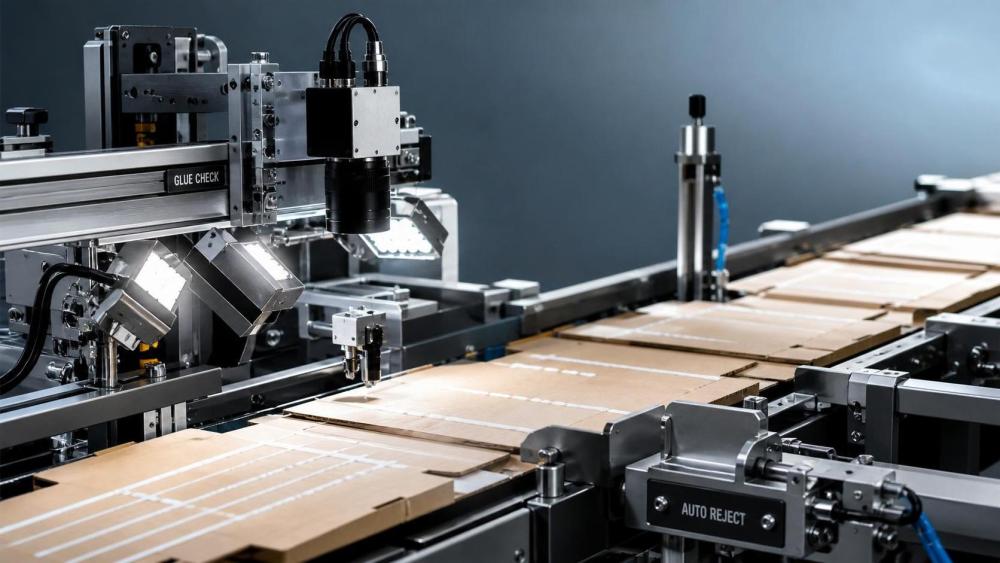
The best inspection point is usually after glue application, where the pattern is still visible, but before folding or compression hides the evidence. That gives you a clean chance to verify presence, position, and continuity.
Still, not every line has ideal physical space. On older folder gluers, you may be dealing with limited mounting room, moving belts, dust, and difficult access for maintenance. In those cases, a “technically possible” installation may still be a poor operational choice if operators cannot clean lenses safely or if vibration keeps changing the image.
When deciding placement, look at three things together:
- Visibility of the full glue pattern
- Mechanical stability of the inspection zone
- Available response time before the carton reaches the reject point
That last point is often underestimated. Detecting a defect is easy compared with rejecting the right carton at full line speed. If the system sees a fault but the tracking distance to the ejector is not calibrated properly, you get false rejects, missed rejects, or both. Then operators stop trusting the system, and trust is hard to rebuild.
Lighting is usually the make-or-break factor
Teams often focus on camera resolution because it is easy to compare on a quotation sheet. In practice, lighting design has more influence on inspection reliability.
Glue can be transparent, glossy, uneven, or affected by board absorbency. Dark kraft, coated white board, printed graphics, and recycled fiber surfaces all reflect light differently. A setup that works beautifully on a clean white sample may become unstable once production shifts to another substrate.
Good setups control contrast deliberately. That may involve angled lighting to emphasize bead edges, backlighting in specific layouts, or tuned illumination that separates adhesive reflectivity from the carton background. The right answer depends on the adhesive type and substrate finish. There is no single “best” light.
If you are managing a project across multiple SKUs, ask to validate the inspection recipe on the hardest-to-read board, not the easiest one. That is the version that will expose whether the system is robust or just optimistic.
The inspection rule should match seal function
One common mistake is setting thresholds that look precise on screen but do not reflect actual box performance. A system can be too loose and miss defects, or too strict and flood the line with nuisance alarms.
What matters is not only visual perfection. What matters is whether the adhesive pattern can produce a reliable bond after folding, compression, and curing under real production conditions.
That means your acceptance rule should be tied to known process reality:
- Minimum bead width needed for bond strength
- Allowed gap length before seal integrity drops
- Tolerance for lateral glue displacement
- Critical zones such as leading edges, corners, and lock areas
In other words, build the rule around failure risk, not aesthetics. A tiny visual inconsistency in a non-critical area may not matter. A short skip at the seam start might matter a lot.
The best commissioning teams confirm this by running controlled defect trials. They intentionally create bad samples, inspect them, fold them, and then compare image results with actual seal performance. That step takes effort, but it prevents months of arguing later about whether the system is “wrong” or the process is unstable.
Integration matters more than the standalone device
A glue inspection project becomes useful when it connects to line controls, reject handling, and production reporting. On a modern converting line, inspection should not sit off to the side as a passive monitor.
You want it linked to:
- Encoder or position tracking for carton-to-reject synchronization
- HMI alarms that distinguish warning conditions from hard faults
- Recipe management for repeat jobs
- Defect logs for root-cause analysis
- Optional trend data to spot drift before a batch goes out of spec
This is where many engineering teams start thinking beyond one machine. A glue inspection station can also become part of a wider quality intelligence approach, especially in plants already improving print inspection, code verification, and folder gluer performance together. That broader view is one reason industry observers such as CPCS keep paying close attention to inline vision and end-of-line process control: the real gain is not just catching one bad carton, but reducing hidden waste across the full converting workflow.
What to check before sign-off
By the time a supplier says the system is ready, the most important questions are operational. Can it hold performance across shift changes? Can operators clean and re-teach it without engineering support every time? Can maintenance replace a light or camera mount without losing the setup?
Use a sign-off checklist grounded in production reality:
- Test across full speed range, not only at reduced commissioning speed
- Validate on every relevant substrate family
- Verify reject timing with consecutive defect samples
- Check false reject rate during stable production
- Document recipe changeover steps and backup procedures
- Train operators on fault response, not only on screen navigation
If a system only performs well with the vendor’s engineer standing next to it, it is not ready.
Common mistakes that create expensive frustration
The most expensive error is treating glue inspection as a compliance add-on instead of a process control tool. That mindset leads to under-scoped projects, weak integration, and vague ownership between quality, production, and engineering.
Another frequent issue is trying to inspect glue on a line that is mechanically too unstable for repeatable vision. If carton position varies heavily at the inspection point, the answer may be to improve transport control first. Vision cannot create a fixed target from a moving one.
There is also a budgeting mistake: some teams approve the hardware but not the commissioning time needed for recipe development, defect mapping, and operator training. Then the system technically exists, but nobody wants to rely on it.
And one more point that deserves blunt wording: do not measure success by “camera installed” or “alarm appears on screen.” Measure it by fewer seal defects, lower complaint risk, stable false reject performance, and better waste visibility.
When Glue Inspection Systems are the right fit, and when they are not
They are a strong fit for high-speed folder gluers, multi-SKU packaging operations, regulated products, premium retail cartons, and plants where seal failure creates costly recalls, repacking, or customer deductions. They also make sense when adhesive application is fast enough that manual checking becomes little more than guesswork.
They are less effective as a first investment if the line still has basic unresolved issues such as severe blank variation, poor glue delivery stability, or no reliable reject mechanism. In those cases, the inspection layer may expose problems clearly, but it will not solve the underlying process weakness.
That does not mean you should wait for perfection. It means the project scope should be honest about what the system can control and what still belongs to machine condition, adhesive selection, and setup discipline.
FAQ
How accurate do Glue Inspection Systems need to be?
Accurate enough to separate real seal risk from harmless variation. The target is dependable defect detection with a manageable false reject rate, not theoretical perfection.
Can one system handle different carton sizes and glue patterns?
Usually yes, if recipe management is set up properly. The real question is how much changeover time and operator skill the system requires between jobs.
Should glue inspection trigger an automatic line stop?
Only for defined critical faults or sustained defect trends. For many lines, selective reject plus alarm is more practical than stopping production for every isolated defect.
Is vision enough to guarantee seal quality?
No. Vision confirms the visible adhesive pattern. Seal quality still depends on fold accuracy, compression, substrate behavior, and adhesive performance.
Closing thought
If you are setting up Glue Inspection Systems, the smartest approach is to treat them as part of a seal-control strategy, not as a standalone gadget. Get the inspection point right, tune the lighting for the actual substrate mix, tie defect rules to bond performance, and make sure reject handling is trustworthy. That is what turns inspection from a screen full of images into something that genuinely protects seal quality, uptime, and waste performance.
Image Placeholder List
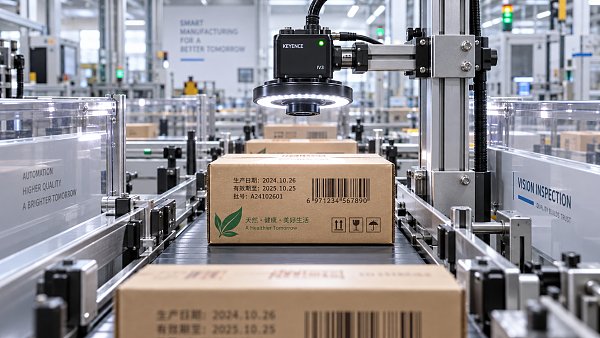
- - Suggested placement: near the section about line placement and reject timing. Image content: a folder gluer glue inspection station showing camera position, adhesive path, carton travel direction, and reject point. Alt text: “Glue inspection system layout on a folder gluer for seal quality control.”
Internal Link Anchor Text Suggestions
- Anchor text: folder gluer inspection setup guide - Suggested page: technical guide on folder gluer optimization
- Anchor text: inline vision inspection for packaging lines - Suggested page: coding and vision inspection topic hub
- Anchor text: reducing waste in corrugated converting - Suggested page: OEE and waste reduction article
- Anchor text: carton sealing defects and root causes - Suggested page: troubleshooting resource page
- Anchor text: adhesive application control in packaging machinery - Suggested page: glue system or process control page
External Authority Source Suggestions
- Industry association reports on carton converting, quality inspection, and packaging line best practices
- Adhesive manufacturer technical documentation for cold glue application, bond performance, and substrate compatibility
- Machine builder or vision system supplier official technical manuals covering lighting, validation, and integration methods
Related News
 How to Build a Reliable Compact Vision Sensor Inspection SystemBuild a reliable compact vision sensor inspection system with proven guidance on lighting, triggering, defect detection, and production-ready quality control.Machine Vision & Coding Fellow
 How High Accuracy Spectrophotometers Improve Print Color Controlhigh accuracy spectrophotometers help print and packaging teams detect color drift early, reduce waste, improve approvals, and protect brand consistency across every production run.Machine Vision & Coding Fellow
 How Spectrophotometers for Color Matching Improve Print ConsistencySpectrophotometers for color matching help printers control Delta E, reduce waste, and deliver reliable brand color across every press run.Machine Vision & Coding Fellow
 How Print Inspection Systems Prevent Defects Before ShipmentPrint Inspection Systems help detect print, barcode, color, and coding defects in real time—improving traceability, reducing waste, and preventing costly shipment failures.Machine Vision & Coding Fellow
 Smart Cameras for Inspection That Catch Print Defects in Real TimeSmart camera for inspection solutions catch print defects in real time, verify codes, reduce false rejects, and strengthen packaging quality control.Machine Vision & Coding Fellow
 How Color Sensors Support Reliable Inline Print Quality InspectionColor Sensors enable reliable inline print quality inspection, helping packaging plants detect color drift early, reduce waste, protect brand consistency, and improve traceability.Machine Vision & Coding Fellow