How to Compare Carton Inspection Systems for Print Defect Detection
How to Compare Carton Inspection Systems for Print Defect Detection
A carton inspection system that catches obvious misprints may still miss unreadable codes, subtle registration errors, or incorrect text at production speed. For quality control and safety teams, comparing Carton Inspection Systems means looking beyond camera resolution to assess detection capability, false rejection rates, inspection coverage, and reliable removal of faulty cartons.
The useful comparison is not which supplier produces the cleanest demonstration. It is which system can distinguish unacceptable defects from normal print variation on your substrates, at your operating speeds, with controls your team can maintain. That requires a shared test protocol—not just competing equipment specifications.
Define what must never pass
Start with the consequences of a defect. A small mark in a decorative background and a missing character in a product warning should not carry the same acceptance threshold. Before contacting suppliers, build a defect specification that separates critical information errors from functional and cosmetic print faults.
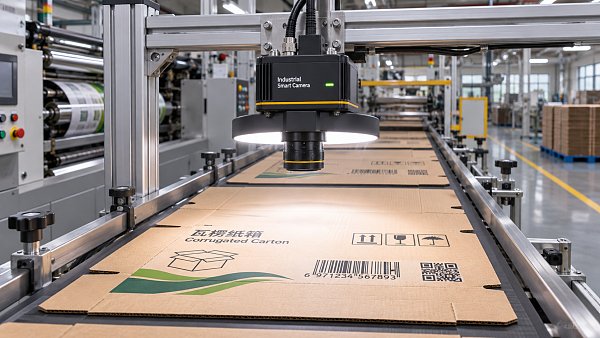
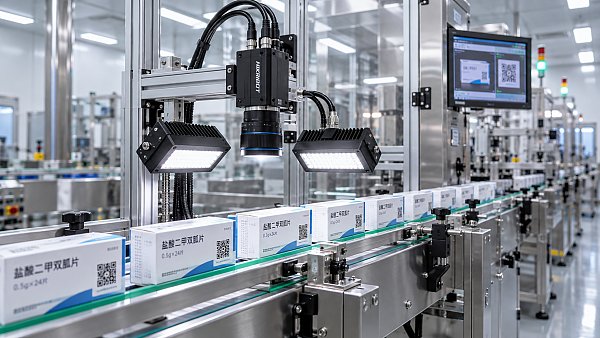
For pharmaceutical cartons, product identity and approved text may dominate the assessment. Food packaging may require close attention to allergen statements and variable date information. On corrugated shipping cartons, barcode performance, handling symbols, and identification marks may matter more than minor background variation. Actual acceptance criteria must follow the product specification, customer agreement, and applicable requirements.
- Content errors: wrong artwork, missing text, mixed versions, incorrect batch information, or mismatched codes.
- Print-process defects: missing ink, spots, streaks, smearing, fill-in, and color-to-color misregistration.
- Readability failures: broken characters, insufficient contrast, distorted barcode elements, or print crossing a crease.
Specify the smallest unacceptable defect by location and type, rather than asking for “maximum sensitivity.” A system tuned to reject every visible variation can create excessive waste without improving control of critical errors.
Compare inspection functions, not feature labels
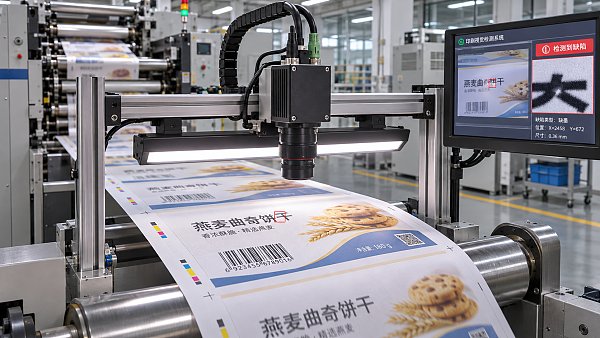
“Full print inspection” can mean different things. Image comparison, text recognition, code reading, and color measurement solve different problems. Establish which functions are included, which require additional software, and which remain outside the proposed system’s scope.
Ask how reference artwork is approved and protected. Teaching the system from a production sheet is convenient, but that sheet may already contain a defect. Comparing against approved digital artwork reduces this particular risk, although differences between digital files and printed substrates still need controlled handling.
Variable data needs separate logic. Masking a changing batch-code area may prevent nuisance alarms, but it also removes inspection coverage unless another function checks that field against the expected data.
Check the optical setup at production speed
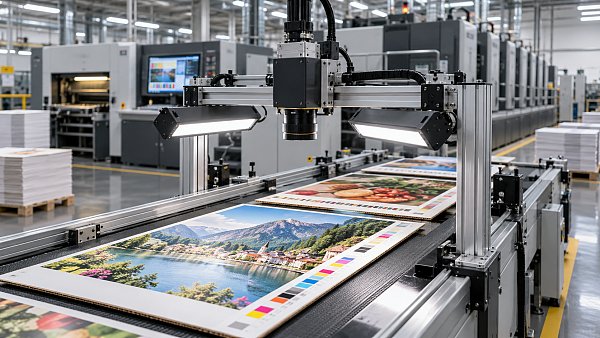
Camera megapixels are not a reliable standalone comparison. Detectability depends on the field of view, object-space pixel size, lens performance, illumination, contrast, exposure time, and material movement. A wider inspection area can reduce the detail available for a small character even when the camera specification looks impressive.
Ask suppliers to state the smallest defect they can demonstrate on your material at the required speed. Distinguish detecting a spot from reading a character: text recognition requires enough image detail to separate similar characters, not simply register that ink is present.
The substrate matters. Corrugated board can introduce uneven surfaces, warp, and variable print appearance. Coated folding cartons may produce glare; foil and varnish can change the reflected image with viewing angle. A trial on flat, matte samples does not establish performance on reflective or unstable stock.
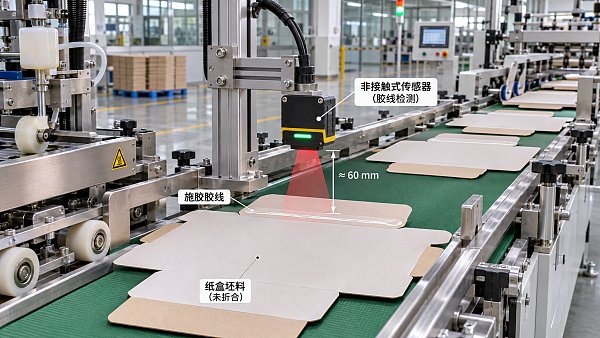
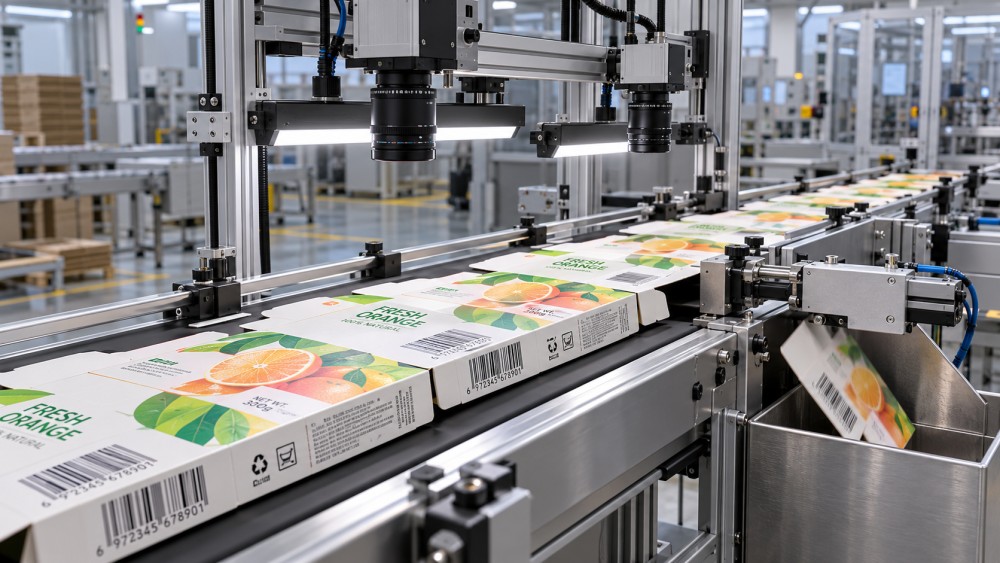
Review the physical inspection location as carefully as the camera. Press-mounted inspection gives earlier feedback, while inspection near a folder gluer can catch defects introduced during later handling. However, folded panels, belts, overlaps, or glue flaps may obscure print. “100% inspection” should identify exactly which surfaces and regions are visible.
Use a trial that exposes missed defects and false rejects
Give shortlisted suppliers the same representative sample set. Include known defects, acceptable production variation, challenging substrates, and examples near the acceptance boundary. Retain a separate blind set for the witnessed test so that performance is not judged only on samples used for tuning.
Run acceptable cartons alongside defective ones. Otherwise, a system can appear highly effective simply by rejecting aggressively. Record results by defect category, size, location, substrate, and speed; an overall detection percentage can conceal poor performance on the most consequential error.
- Detection rate: known defective samples correctly flagged, divided by known defective samples presented.
- False rejection rate: acceptable samples incorrectly flagged, divided by acceptable samples presented.
- Escape rate: known defective samples passed as acceptable, divided by known defective samples presented.
Keep these denominators explicit in supplier reports. Also separate the camera’s classification result from the physical rejection outcome: detecting a defect is not the same as removing the affected carton.
Test steady running, acceleration, deceleration, restarts, and normal spacing variation. Include consecutive defective cartons, not just isolated defects. Record threshold changes and tuning time. A successful run after extensive specialist adjustment may not represent what operators can repeat during a short-run changeover.
No finite sample trial proves that defects can never escape. It provides evidence within defined conditions. The purchasing decision should reflect both that evidence and the consequences of failures outside the tested range.
Treat rejection as a separate acceptance test
Between the camera and reject device, sheets may slip, spacing may change, and transport may stop. The system must track the affected carton through those events. Ask how tracking works and how rejection is confirmed independently of the command sent to the actuator.
Challenge the installation with closely spaced rejects, the specified carton size range, reduced air pressure where pneumatic rejection is used, a full reject container, and an unavailable reject mechanism. Agree the required response to each condition. Depending on the risk assessment, this may involve an alarm, controlled stop, or segregation of potentially affected output.
Define recovery rules too. After a jam, emergency stop, or loss of tracking, operators need a clear way to identify and quarantine uncertain material. An unexplained count difference between inspected, accepted, and rejected cartons should not disappear when the job is closed.
For safety management, review guarding, access for cleaning, and machinery control integration. Print inspection is a quality-control function; it should not be assumed to provide personnel protection unless a separately designed and validated safety function is included.
Look beyond the demonstration screen
Frequent changeovers expose weaknesses that a single-job trial will miss. Check how recipes are selected, how expected code data is loaded, and whether operators can accidentally run an obsolete artwork revision. User permissions should distinguish routine operation from changes to critical inspection thresholds.
Traceability should support investigation rather than merely accumulate images. Useful records connect the job, artwork revision, recipe, time, defect classification, and reject outcome. Confirm image retention, storage capacity, export formats, access control, and behavior when the network or storage becomes unavailable. Not every installation needs every image retained, but the retention policy must be deliberate.
Maintenance deserves a practical demonstration. Ask an operator to clean the optical window, restore a recipe, and check a challenge sample. Establish how lighting deterioration, contamination, camera movement, or encoder problems are identified. Confirm spare-part availability, software licensing, backup restoration, and who supports interfaces with the existing line controls.
Make the decision around proven operating limits
Use mandatory pass conditions before applying a weighted score. A system that cannot inspect a critical panel or reliably reject a faulty carton should not compensate for that gap through a lower price or better reporting interface. Compare qualified systems on changeover effort, false rejects, maintainability, integration, and total operating cost.
Include transport modifications, lighting, guarding, commissioning, training, licenses, storage, and planned maintenance in that cost. Cheap hardware can become expensive when normal jobs require repeated tuning or excessive manual review.
This system-level perspective aligns with Global Commercial Print & Corrugated Packaging Intelligence (CPCS), an information platform covering printing, converting, inspection, and packaging automation. Inspection value depends on its connection to the production process—not camera specifications in isolation.
Before approval, put the tested defect limits, materials, speeds, coverage exclusions, rejection checks, and recovery procedures into the acceptance documents. Repeat critical tests after installation on the actual line. The strongest choice is the system whose limits are understood, whose results are repeatable, and whose failures your team knows how to contain.
Related News
 How Do Inline Glue Detection Systems Find Missing Glue?Discover how inline glue detection systems identify missing adhesive, prevent defective cartons from reaching customers, and support reliable quality control.Machine Vision & Coding Fellow
 How Does an Automatic Defect Detection System Inspect Print?Discover how an automatic defect detection system inspects print, identifies flaws, checks codes, and helps manufacturers improve quality control.Machine Vision & Coding Fellow
 How Can an AI Smart Camera Detect Defects in Printed Packaging?Discover how an AI smart camera detects printed packaging defects and what it takes to deliver reliable inspection at production speed.Machine Vision & Coding Fellow
 How to Choose a Pharmaceutical Carton Inspection SupplierChoose a pharmaceutical carton inspection supplier with confidence. Compare detection performance, integration, validation support, service, and lifecycle costs.Machine Vision & Coding Fellow
 How Color Inspection Systems Detect Print Color VariationsColor Inspection Systems detect print variations through imaging and measurement. Discover how references, tolerances, and setup improve quality control.Machine Vision & Coding Fellow
 How to Set Up an Inspection Camera for Print Quality ControlSet up an inspection camera for print quality control with practical tips on lighting, focus, triggers, and defect detection. Learn how to reduce false rejects and validate results at production speed.Machine Vision & Coding Fellow