How to Choose an Inspection Camera Manufacturer for Print Quality
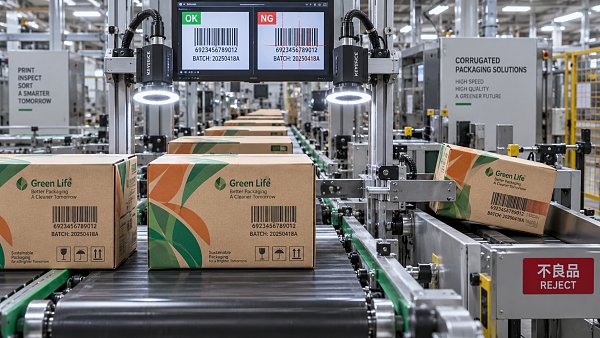
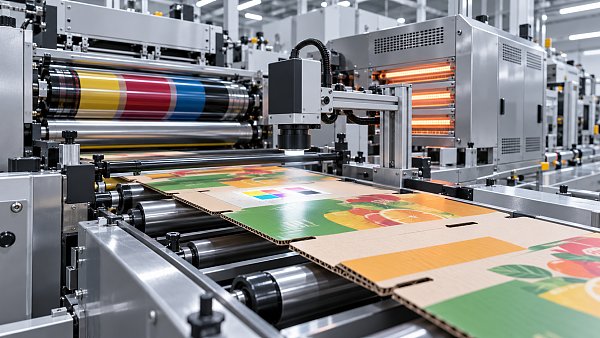
Choosing an inspection camera manufacturer for print quality is not mainly a hardware decision. For quality managers and safety supervisors, it is a process control decision that affects complaint risk, rework cost, traceability, and line stability. In commercial printing and corrugated packaging, cameras are often discussed as if better image resolution automatically means better quality assurance. In practice, the real question is whether the manufacturer can deliver a system that keeps detecting meaningful defects under actual factory conditions: changing substrates, unstable lighting, dust, vibration, ink variation, speed fluctuations, and frequent job changeovers.
That is why supplier selection deserves more discipline than a simple comparison of camera pixels, detection speed, or quoted price. A strong inspection camera manufacturer should understand print defects in context, not just imaging in isolation. If the system is meant to protect barcode readability, pharmaceutical carton accuracy, color consistency, or batch traceability, the manufacturer must show how its equipment performs across the full production workflow, from press output to converting and final verification.
Start with the production risk, not the camera specification
Many buying teams begin by asking what camera model is needed. A better starting point is to define what type of print failure is costly enough to justify investment. In some plants, the main issue is missing or unreadable codes. In others, it is registration drift, streaking, hickeys, plate wear, color inconsistency, text deformation, or mixed-up artwork during short-run order changes.
These are not equivalent problems, and they do not require the same manufacturer capability. A supplier that performs well in code verification may be less suitable for decorative print inspection where color tolerance and fine-detail detection matter more. A manufacturer experienced in flexible packaging or electronics may also need closer validation before being used on corrugated board or folding carton lines, where substrate warp, dust, flute profile, sheet vibration, and ink absorption can change inspection behavior.
Before comparing vendors, the quality team should define a short list of business-critical defect classes:
- Defects that create customer complaints or product rejection
- Defects that lead to hidden rework and material waste
- Defects that create compliance or traceability exposure
- Defects that operators currently miss at production speed
- Defects that increase sorting labor at the finishing stage
That exercise usually reveals whether the plant needs a print-facing inspection partner, a code-and-data verification specialist, or a broader machine vision supplier with packaging integration capability.
Application fit matters more than broad product catalogs
An inspection camera manufacturer can look impressive on paper and still be a poor fit for print quality control. What matters is not how many industries the company serves, but how well it understands the production realities of your process. Commercial print, carton converting, and corrugated packaging all place different demands on imaging systems.
For example, high-speed corrugated applications may require stable inspection despite board flutter, uneven surface texture, and large-format sheet handling. Folding carton lines may place more emphasis on fine print, braille position, serialized codes, or downstream gluing verification. Commercial print environments may prioritize color uniformity, registration, and variable-data accuracy during shorter runs and frequent job switches.
A capable manufacturer should be able to explain where its system works best and where its limits begin. That answer is more valuable than a generic promise that the platform can inspect everything. When suppliers avoid discussing boundaries, buyers usually discover those boundaries later in commissioning.
Useful questions include:
- Which print processes does the manufacturer support most often: flexo, offset, digital, gravure, or mixed environments?
- How does the system perform on kraft liners, coated board, white-top liners, recycled papers, or glossy printed substrates?
- Can it maintain detection accuracy during speed changes and order changeovers?
- Has the supplier integrated with folder gluers, die-cutters, coding systems, or press-side controls before?
- What defect libraries or training methods are available for different packaging formats?
These questions help separate a true application specialist from a camera vendor that is still learning the sector on the customer’s line.
Detection performance should be judged under real operating conditions
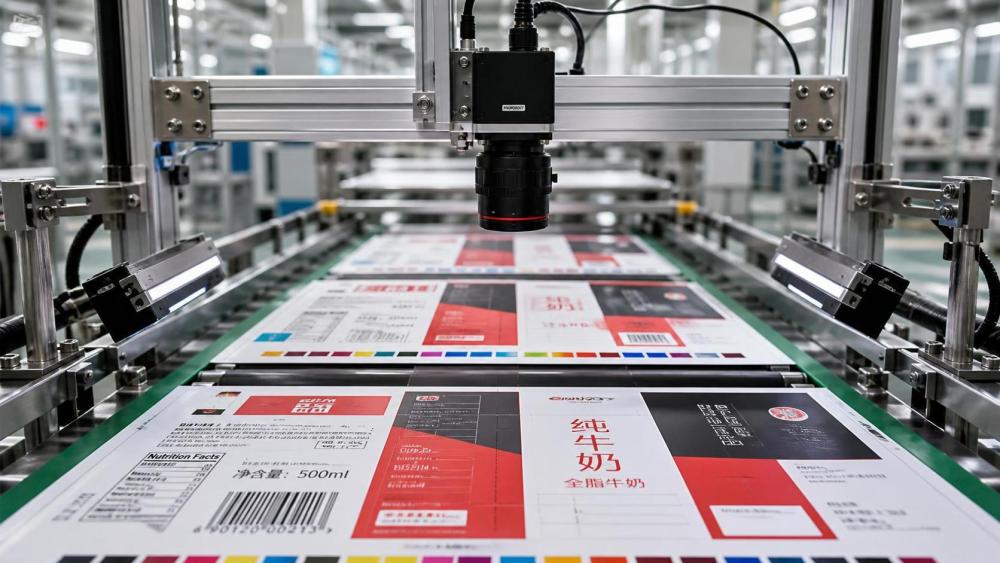
Factory buyers often receive demonstration samples where the inspection result looks clean and convincing. Those tests are useful, but they can be misleading if the sample set is narrow or the environment is controlled. A manufacturer should be evaluated on repeatable performance in realistic conditions, not only in ideal demonstrations.
In print quality control, three issues deserve particular attention.
False rejects versus escape risk
A system that catches every possible defect but stops the line constantly may create as much damage as one that misses defects. Excessive false rejects increase waste, reduce operator trust, and can lead teams to loosen thresholds until the system becomes little more than a visual display. Conversely, aggressive tolerance settings can allow subtle defects to pass until they become a batch-level complaint.
The manufacturer should show how sensitivity is tuned by defect class, job type, and customer requirement. It should also explain how recipes are stored and managed when many SKUs run on the same line.
Lighting and image stability
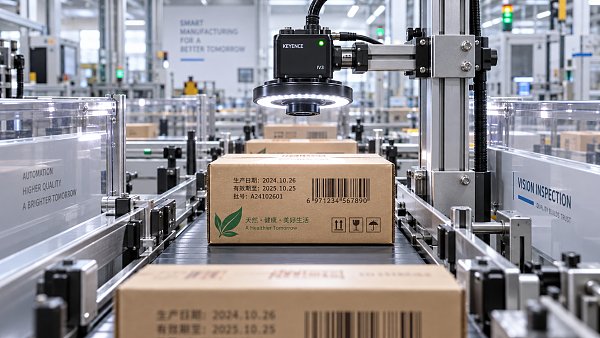
Inspection quality depends as much on lighting architecture, shielding, mechanical mounting, and image processing as on the camera sensor itself. In dusty corrugated plants or vibrating press environments, poor installation design can degrade performance even if the camera core is technically strong. Ask whether the manufacturer controls the full imaging package or relies heavily on third-party integration for critical components.
Speed and latency
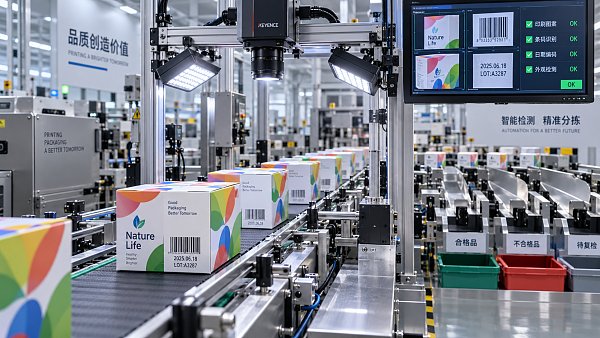
At higher line speeds, the value of detection depends on whether the system can trigger action in time. If the camera identifies a defect only after too many sheets have already passed downstream, the plant still faces sorting, waste, or shipment risk. The supplier should define what happens after detection: mark, eject, stop, alarm, log, or connect to upstream process adjustment.
Integration capability is often where projects succeed or fail
For quality managers, the camera is only one part of the control loop. The larger issue is how the inspection system fits into existing equipment, operator routines, and traceability requirements. This is especially important in plants moving from standalone machines toward connected production systems.
An inspection camera manufacturer should be assessed on its ability to integrate with:
- Press controls and HMI environments
- Coding and serialization systems
- Reject, marking, or sorting mechanisms
- MES, quality records, or production data platforms
- Remote diagnostics and maintenance alert systems
This matters because many print quality failures are not solved by image detection alone. If the system cannot feed useful data back into production decisions, it remains reactive. Plants then gain evidence of defects without gaining enough control to reduce them systematically.
For safety supervisors, there is another practical layer. Inspection units placed around moving webs, feeders, or conveying sections should not introduce awkward access points, exposed mounts, or maintenance routines that create additional operator risk. Space, guarding, cleaning access, cable routing, and service positioning all need review during supplier evaluation, not after installation.
Service depth is a better long-term indicator than a low purchase price
The cost of an inspection system is rarely limited to the initial quotation. Over time, the larger cost drivers are commissioning quality, parameter stability, operator training, software support, spare parts access, and the speed at which the manufacturer can resolve performance drift. For production plants running tight schedules, weak support can turn a technically good system into an underused asset.
This is one of the more common gaps in vendor selection. Buyers compare equipment features carefully but treat service structure as a secondary issue. In reality, service capability often determines whether the system remains active and trusted six months after startup.
It is worth checking:
- Whether the manufacturer has local or regional technical support
- How defect recipe optimization is handled after startup
- What training is provided for operators, quality staff, and maintenance teams
- How software updates and remote diagnostics are managed
- What the response path is for recurring nuisance alarms or unstable detection
If a supplier cannot explain how it supports a plant after acceptance testing, the burden will shift back to the customer. That is a hidden operating cost many teams underestimate.
Do not assume AI claims translate into production value
Machine vision suppliers increasingly describe their platforms using AI language. Some of these capabilities may be useful, especially in complex defect classification or adaptive learning. But in print quality applications, the practical question is narrower: does the intelligence reduce misses, reduce false alarms, shorten setup time, or improve consistency across operators and SKUs?
If the answer is vague, the claim may be more commercial than operational. Many plants do not need a highly advanced model if a rules-based system with stable lighting and sound defect logic already addresses the main risks. In other cases, AI-supported classification may help where defect patterns vary too much for traditional threshold methods.
Buyers should ask for evidence tied to production conditions, not broad statements. It is reasonable to request examples of how the system handles new artwork, substrate variation, print drift, or defect retraining. It is also reasonable to ask what level of data volume and engineering support is needed to keep the model effective over time. Those requirements are sometimes underestimated in early sales discussions.
Reference projects should match your operating profile
References are useful only when they are comparable. A successful installation in a low-mix print shop may not say much about performance in a high-changeover packaging plant. Likewise, a web-based installation does not fully validate a sheet-fed application.
When reviewing manufacturer references, try to match four variables: process type, substrate type, line speed, and defect priority. If possible, ask what changed operationally after installation. Did the customer reduce complaints, shorten sorting time, cut startup waste, improve traceability, or simply gain better visibility? The answer reveals whether the system produced measurable value or remained a monitoring tool with limited process impact.
If the supplier cannot share customer names due to confidentiality, it should still be able to provide structured case descriptions. If even that is missing, treat performance claims carefully.
A practical comparison framework for quality and safety teams
When decision-making becomes crowded with specifications, a simple weighted comparison can help. The goal is not to create a perfect scorecard, but to force the team to rank what matters in its own operating environment.
For many factories, this kind of framework leads to a more disciplined result than choosing the vendor with the strongest demo or lowest capital cost.
What usually gets overlooked in final selection
Several factors tend to be missed during procurement. First, recipe management can become a major issue in plants with frequent SKU changes. A system that inspects well but is cumbersome to switch may create operator shortcuts and quality inconsistency. Second, environmental durability matters more in corrugated and packaging plants than in clean lab conditions. Dust, temperature variation, and mechanical shock affect long-term stability. Third, defect ownership should be clarified. If a defect is detected, who acts, how fast, and with what authority? Technology without a clear response path does not close the quality loop.
Another overlooked issue is cross-functional alignment. Quality teams may focus on defect sensitivity, production teams on speed, maintenance teams on reliability, and safety teams on access and guarding. A manufacturer that can speak credibly to all four perspectives is usually more mature than one that addresses only procurement and engineering.
The better question is whether the manufacturer improves control, not just visibility
In print and packaging operations, inspection systems are often purchased after a specific problem becomes expensive: customer claims, code failures, mixed jobs, or unstable quality at speed. That urgency can push teams toward fast hardware comparisons. But the stronger decision is to ask whether the inspection camera manufacturer can improve control across the line, not merely capture images of what went wrong.
The suppliers worth serious attention are usually those that understand print defects as production events, can prove stable performance under actual plant conditions, integrate into broader quality workflows, and support the system after startup without leaving the customer to solve the difficult parts alone. For quality managers and safety supervisors, that is the difference between buying a camera and building a more reliable print assurance process.
Related News
 How to Build a Reliable Compact Vision Sensor Inspection SystemBuild a reliable compact vision sensor inspection system with proven guidance on lighting, triggering, defect detection, and production-ready quality control.Machine Vision & Coding Fellow
 How High Accuracy Spectrophotometers Improve Print Color Controlhigh accuracy spectrophotometers help print and packaging teams detect color drift early, reduce waste, improve approvals, and protect brand consistency across every production run.Machine Vision & Coding Fellow
 How Spectrophotometers for Color Matching Improve Print ConsistencySpectrophotometers for color matching help printers control Delta E, reduce waste, and deliver reliable brand color across every press run.Machine Vision & Coding Fellow
 How Print Inspection Systems Prevent Defects Before ShipmentPrint Inspection Systems help detect print, barcode, color, and coding defects in real time—improving traceability, reducing waste, and preventing costly shipment failures.Machine Vision & Coding Fellow
 Smart Cameras for Inspection That Catch Print Defects in Real TimeSmart camera for inspection solutions catch print defects in real time, verify codes, reduce false rejects, and strengthen packaging quality control.Machine Vision & Coding Fellow
 How Color Sensors Support Reliable Inline Print Quality InspectionColor Sensors enable reliable inline print quality inspection, helping packaging plants detect color drift early, reduce waste, protect brand consistency, and improve traceability.Machine Vision & Coding Fellow