How Web Inspection Systems Cut Defects on High-Speed Press Lines
On high-speed press lines, quality loss rarely starts with a dramatic machine failure. More often, it begins with a small registration drift, a weak barcode, a missing variable code, a streak from ink contamination, or a substrate wrinkle that escapes notice for a few hundred meters. By the time operators catch it manually, the plant may already be dealing with scrap, quarantine, customer claims, or a delayed shipment. This is the practical context in which Web Inspection Systems have moved from “nice to have” to operational control infrastructure.
For quality and safety teams in commercial print, labels, flexible packaging, and corrugated pre-print applications, the key question is not whether vision inspection sounds advanced. It is whether the system can reduce defect escape, strengthen traceability, and support compliance without becoming another source of nuisance alarms, operator workarounds, or maintenance burden. On fast-running lines, that distinction matters.
Why manual inspection breaks down on high-speed press lines
Most plants still rely on a mix of operator observation, offline sampling, and downstream complaint feedback. That approach can work on slower lines, stable repeat jobs, or low-risk graphics. It becomes fragile when production conditions change quickly: shorter runs, more SKUs, versioned artwork, tighter color expectations, serialized or regulated codes, and higher line speeds.
From a quality-control perspective, the weakness of manual inspection is not just that people miss defects. It is that manual inspection is intermittent. Defects on a moving web are often transient. A splice, tension fluctuation, plate contamination, nozzle issue, doctor blade wear, UV curing instability, or substrate variation may create a defect pattern that appears for seconds and disappears. Sampling may never see it, but the customer might.
Safety and compliance teams face a related issue. If a misprint affects warning text, pharmaceutical carton information, food packaging date coding, or traceability marks, the risk is not limited to appearance. The event becomes a containment problem. Once mixed production is in finished inventory, the cost of sorting rises sharply.
That is why the real value of inline web inspection is continuous verification, not just image capture.
What web inspection actually does in production
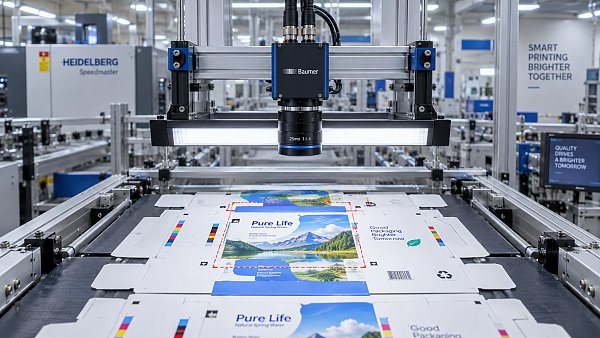
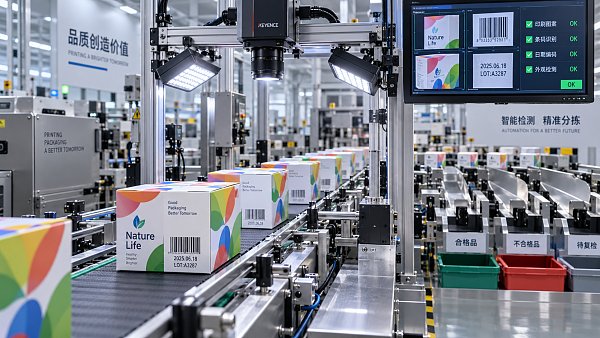
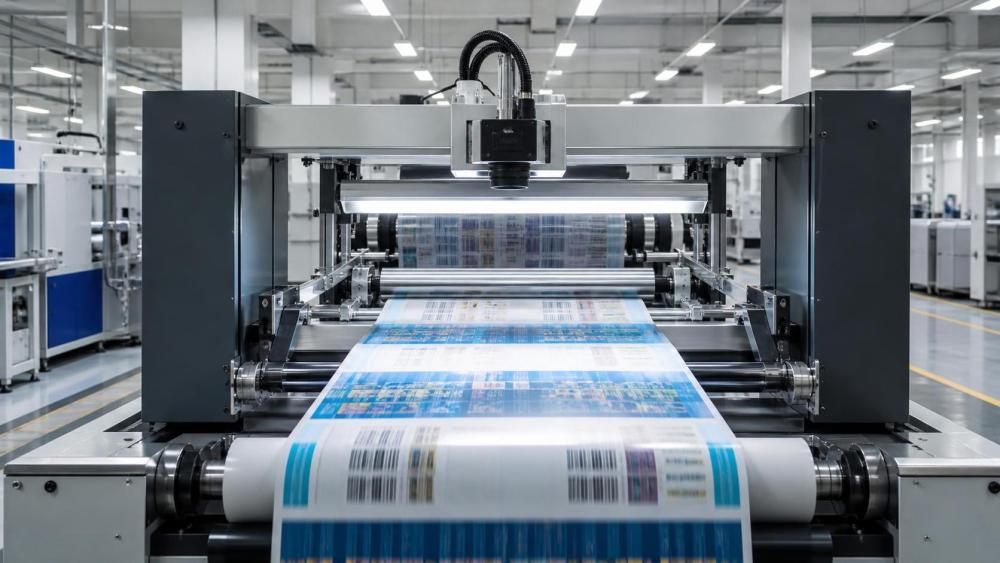
A Web Inspection System typically uses line-scan or area-scan cameras, lighting, software, and defect classification logic to monitor the moving web in real time. In practice, quality teams use it to detect several defect groups:
- print registration errors
- color-to-color shift
- missing print or weak print
- hickeys, streaks, splash, smears, and spots
- substrate wrinkles or web deformation
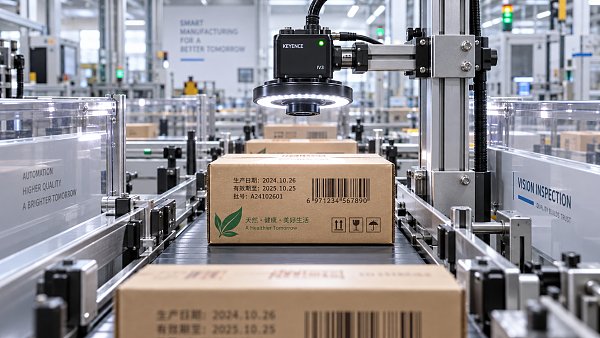
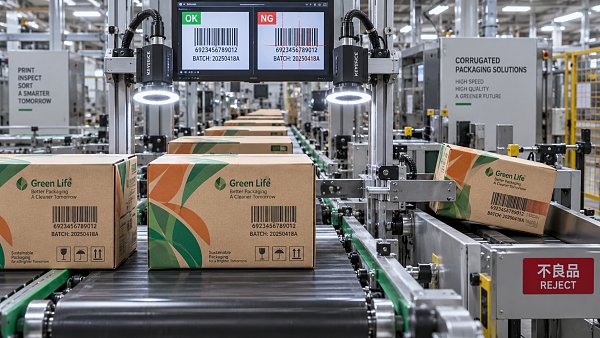
- barcode and 2D code readability issues
- missing or incorrect variable data
- repeat defects linked to plate, cylinder, or roller conditions
The important point is that these systems do not reduce defects simply by “seeing more.” They reduce defects because they shorten the time between defect occurrence and corrective action. If the system identifies a registration drift within seconds, the operator can intervene before hundreds or thousands of bad impressions accumulate. If the software links recurring defects to repeat position, maintenance can investigate a cylinder or roller source instead of treating each alarm as random contamination.
For quality managers, this changes defect handling from retrospective sorting to process control.
Where defect reduction is most visible
Plants usually see the clearest benefit in three areas.
First, startup and changeover waste. High-speed presses often generate their highest defect rate during job setup, color stabilization, and speed ramp-up. Web inspection helps teams verify when the line is actually within quality limits, rather than relying on visual judgment alone. That can reduce both overproduction of setup waste and premature release of unstable output.
Second, intermittent defects during long runs. Long jobs create a false sense of stability. In reality, anilox contamination, viscosity drift, substrate roll variation, curing inconsistency, or tension changes can introduce defects after the line has been running well for hours. Continuous inspection catches these events early.
Third, code and content verification. In many packaging environments, a visually acceptable print can still be nonconforming if barcodes are unreadable, date codes are missing, or artwork versions are incorrect. This is especially relevant where traceability, customer specification control, or product safety labeling matters. A press can meet color expectations and still fail the more important quality requirement.
Why quality teams should not treat all defects equally
A common implementation mistake is setting up inspection around everything the camera can detect rather than everything the business must control. On a live press line, that creates alarm fatigue very quickly.
Quality and safety teams should separate defects into at least three practical categories:
- Critical defects: wrong artwork version, missing safety text, unreadable barcode, missing code, major registration failure, print omission
- Major defects: visible streaks, strong color shift, contamination spots, repeat flaws likely to trigger customer rejection
- Minor defects: small cosmetic variation that may be acceptable depending on end use and customer tolerance
This classification matters because the inspection response should match the risk. Some events should trigger an immediate stop or automatic marking for removal. Others should generate operator review or trend alerts. If every minor variation is treated like a critical event, the system will lose credibility on the shop floor.
In regulated or brand-sensitive packaging, the threshold for “critical” is often driven less by appearance and more by function. A small defect in a barcode quiet zone may matter more than a larger but purely cosmetic spot elsewhere on the design.
Integration matters more than camera resolution
Many buying discussions focus too early on camera count, pixel performance, or software interface design. Those features matter, but they do not determine success by themselves. For defect reduction on high-speed lines, integration quality is usually more important.
Quality teams should examine how the inspection system connects with the press and the plant workflow:
- Can it synchronize with encoder signals and true web speed?
- Can it distinguish recurring mechanical defects from random print noise?
- Can it trigger marker systems, reject logic, or downstream removal processes?
- Can it store defect images by roll, job, order, and timestamp?
- Can it support audit trails for customer complaints or internal CAPA processes?
- Can it communicate with MIS, job data, or coding systems where needed?
If the answer to these questions is weak, even a technically capable vision system may end up functioning as an expensive monitor rather than a defect-control tool.
What changes on corrugated and packaging print lines
In packaging production, inspection requirements differ from those in general commercial print. The issue is not just image quality. It is production reliability under industrial conditions.
Corrugated pre-print and packaging lines often involve substrate variation, dust, vibration, broad webs, changing graphics, and demanding uptime targets. In these environments, false positives can become a serious operational problem. Systems must be robust enough to inspect consistently despite board or paper variability, uneven reflectivity, and press-side contamination.
Another difference is the cost of downstream failure. In folding carton, corrugated display packaging, or retail-ready packaging, a defect may not be visible until die-cutting, folding, gluing, or packing stages. Once defective material moves further downstream, recovery cost rises because labor, adhesive, conversion time, and warehouse handling have already been added.
That is why packaging plants often gain value from inspection not only as a print-quality control layer, but as a containment barrier before converting.
Common reasons web inspection underperforms
When plants say a Web Inspection System “did not deliver,” the cause is often not the core technology. It is usually one of several implementation gaps.
Poor golden sample or reference setup. If the master image is not defined correctly, the system may flag acceptable variation or miss meaningful deviation.
Unrealistic sensitivity settings. Plants sometimes try to capture every possible defect from day one. That leads to unstable performance and operator distrust.
Weak lighting control. Vision performance depends heavily on lighting consistency, especially with reflective coatings, varnish, metallic effects, or variable substrate surfaces.
No defect escalation logic. If alarms do not link to action rules, operators end up acknowledging warnings without process response.
Insufficient operator and QC alignment. Production may prioritize running speed while quality expects zero tolerance. Without agreed rules, the system becomes a source of conflict rather than control.
Ignoring maintenance. Camera lenses, lighting units, enclosures, mounts, and triggering components require cleaning, calibration, and periodic verification. A neglected system gradually loses reliability.
How quality and safety teams should evaluate suitability
Not every press line needs the same inspection architecture. The right question is whether the risk profile justifies continuous inline detection.
Web inspection is usually easier to justify when one or more of these conditions apply:
- high line speed makes manual review ineffective
- jobs contain barcodes, QR codes, or variable data
- customer claims from print defects are costly or frequent
- the plant handles food, pharma, personal care, or high-brand-value packaging
- changeovers are frequent and setup waste is a major issue
- defects discovered downstream create expensive rework or sorting
- traceability expectations require image-based evidence or event logs
On the other hand, a simpler inspection approach may be enough for slower lines with stable repeat work, low compliance risk, and limited artwork complexity. Over-specifying the system can create cost without corresponding control improvement.
What to ask before implementation
For practical decision-making, quality and safety teams should push beyond vendor demos and ask plant-specific questions:
- Which defects currently escape most often, and where are they first discovered?
- How much waste is created before operators detect a typical press-side issue?
- Which defects are cosmetic, and which create compliance or customer risk?
- At what speed, substrate range, and print format must the system perform reliably?
- How will alarms be handled during nights, shift changes, and short-run production?
- Who owns threshold setting, recipe management, and reference approval?
- How will defect data be linked to batch release, quarantine, or complaint investigation?
These questions are more valuable than a generic claim about detection accuracy because they determine whether inspection will improve control in your actual operating environment.
The broader shift: from visual checking to traceable quality control
The packaging and print industry is moving toward system-based quality management. Customers expect consistency, faster response to claims, and clearer evidence of process control. At the same time, labor pressure makes continuous manual inspection less realistic, especially on high-speed lines.
In that environment, Web Inspection Systems are no longer just image-monitoring devices. They are becoming part of a wider production discipline that includes job data control, code verification, defect logging, root-cause analysis, and release traceability.
For quality and safety leaders, the strongest business case is not “better-looking print.” It is tighter control over defect escape, quicker intervention when the process drifts, and more credible evidence when customers or auditors ask what happened on a specific job. On fast press lines, that can make the difference between a manageable process deviation and a costly batch problem.
Used well, inline inspection does not replace operators or QC judgment. It gives them something manual methods cannot provide at speed: continuous visibility, event-based response, and a practical way to cut defects before they become shipments, complaints, or recalls.
Related News
 How to Select an Area Scan Camera for Reliable Print InspectionChoose an area scan camera for print inspection with confidence. Learn how resolution, lighting, speed, and testing affect defect detection—and make a smarter investment.Machine Vision & Coding Fellow
 How to Build a Reliable Compact Vision Sensor Inspection SystemBuild a reliable compact vision sensor inspection system with proven guidance on lighting, triggering, defect detection, and production-ready quality control.Machine Vision & Coding Fellow
 How High Accuracy Spectrophotometers Improve Print Color Controlhigh accuracy spectrophotometers help print and packaging teams detect color drift early, reduce waste, improve approvals, and protect brand consistency across every production run.Machine Vision & Coding Fellow
 How Spectrophotometers for Color Matching Improve Print ConsistencySpectrophotometers for color matching help printers control Delta E, reduce waste, and deliver reliable brand color across every press run.Machine Vision & Coding Fellow
 How Print Inspection Systems Prevent Defects Before ShipmentPrint Inspection Systems help detect print, barcode, color, and coding defects in real time—improving traceability, reducing waste, and preventing costly shipment failures.Machine Vision & Coding Fellow
 Smart Cameras for Inspection That Catch Print Defects in Real TimeSmart camera for inspection solutions catch print defects in real time, verify codes, reduce false rejects, and strengthen packaging quality control.Machine Vision & Coding Fellow