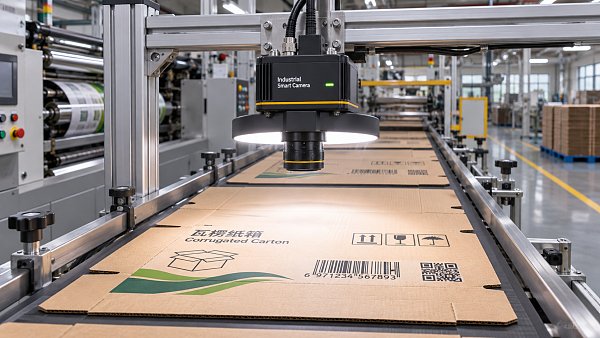
How Spectrophotometers for Color Matching Improve Print Consistency
Print consistency is not achieved when an operator judges a sheet as “close enough” under production lighting. It is achieved when a defined color target, a controlled measurement condition, and a documented tolerance produce the same decision across shifts, presses, substrates, and delivery batches. Spectrophotometers for color matching provide the objective measurement layer that visual inspection cannot reliably supply.
For commercial print and corrugated packaging operations, the practical value is straightforward: a spectrophotometer converts color appearance into repeatable data. That data can reveal whether an ink drawdown is suitable before press start-up, whether a running job is drifting, whether a substrate change has altered the visual result, and whether finished packaging remains within the color expectations agreed with the customer. Used correctly, it reduces the risk of discovering a color problem only after a large quantity has been printed, converted, packed, or shipped.
Why visual approval is not enough for production control
Visual judgment remains necessary, particularly when assessing overall appearance, gloss, print defects, and the interaction of adjacent colors. It is not, however, a stable standalone method for approving color. Human perception changes with illumination, viewing angle, fatigue, surrounding colors, and individual sensitivity. A blue that appears acceptable under one light source may look noticeably different under daylight or retail lighting. Two operators can make different decisions on the same sample without either being careless.
This becomes more consequential in packaging work. Brand colors are often printed on materials with very different optical behavior: coated paperboard, uncoated linerboard, recycled corrugated substrates, metallized stock, films, or varnished surfaces. The press may also be using water-based, UV, solvent-based, or conventional inks. A formula that appears correct on a proofing stock can shift materially on the production substrate because whiteness, absorbency, surface roughness, dot gain, ink film thickness, and gloss all affect the final appearance.
A color-matching spectrophotometer does not eliminate these variables. Its role is to make their effect measurable. Instead of discussing whether a red “looks slightly too warm,” the team can compare the sample against an approved target using L*, a*, and b* values and a defined color-difference method, commonly expressed as Delta E. That changes color control from an opinion-driven discussion into a documented release decision.
The measurement chain matters more than the instrument alone
A spectrophotometer can produce highly repeatable readings while still supporting the wrong production decision if the measurement system has not been defined. Print consistency depends on a chain of controls: the approved standard, the physical sample, the instrument geometry, measurement condition, software settings, tolerance rules, and the action taken when a result falls outside specification.
The first requirement is a clear target. This may be a measured master sample, a brand color library, an approved drawdown, a contract proof, or a digital color specification linked to the intended substrate and printing process. A target taken from an old package without knowing the original ink, substrate, coating, and measurement conditions may be useful for reference, but it is a weak production standard. It can lead a press crew to chase a number that was never technically reproducible under the current process.
The second requirement is that the sample being measured represents the job. On corrugated board, readings taken across a flute-induced uneven surface, close to a score line, over a crushed area, or where print coverage is inconsistent may not represent the usable appearance of the panel. On folding cartons, measurements near varnish transitions, foil, embossing, or die-cut edges can create misleading comparisons. A written sampling location is often more valuable than taking many unstructured readings.
Instrument configuration must also match the approval condition. Measurement geometry, aperture size, observer setting, illuminant, and treatment of optical brightening agents can all influence reported values. Where optical brighteners are present in paper or board, measurement conditions such as M0, M1, M2, or M3 may produce different results because they handle ultraviolet content and polarization differently. The important control principle is not that one condition is universally correct; it is that customer standard, proofing workflow, laboratory approval, and press-floor verification use compatible conditions.

Where color matching becomes a production control tool
The strongest application is not a single final inspection reading. It is measurement at the points where a deviation can still be corrected at reasonable cost.
Before production, the instrument can be used to approve incoming inks, mixed spot colors, or supplier drawdowns against the job target. This is particularly useful where inks are prepared centrally and supplied to several presses. A batch that is outside tolerance can be adjusted or held before it enters a production job, rather than becoming a press-side troubleshooting issue.
At make-ready, measurements provide an objective basis for setting solid ink color and, where relevant, process control values. In flexographic printing, changes in anilox condition, doctor blade performance, plate behavior, viscosity, pH for water-based systems, drying, and substrate absorbency can all affect color. Measuring an approved patch during setup allows the crew to distinguish between an ink formulation issue and a press-condition issue. On offset work, ink-water balance, paper variation, blanket condition, and density control may have similar consequences.
During the run, periodic measurements create a trend record. A single in-tolerance reading is not proof that the job will remain stable. If values are moving consistently in one direction, the job may still be technically acceptable at the moment of measurement but approaching a failure point. Trend-based control gives production teams time to check ink supply, viscosity, pH, drying energy, plate cleaning, press settings, or substrate changes before a drift becomes a rejectable batch.
At release, measured records support lot-level traceability. For packaging carrying regulated information, barcodes, pharmaceutical identifiers, safety instructions, or critical brand elements, color measurements do not replace content verification or vision inspection. They do, however, create evidence that the printed color component was checked against the agreed requirement. This distinction matters: a spectrophotometer verifies colorimetric conformity; it does not confirm that a code is present, readable, correctly positioned, or associated with the right product.
Delta E is useful only when the tolerance reflects the job
One of the most common errors in color quality programs is treating Delta E as a universal pass/fail number. A tolerance is a commercial and technical decision, not merely an instrument setting. It should reflect the importance of the color, the print process, substrate variability, viewing conditions, product category, and the customer’s approved standard.
Brand-critical spot colors on a consumer-facing carton may require a tight, explicitly agreed tolerance because adjacent packs on a retail shelf make variation easy to see. A brown shipping case printed on variable recycled liner may need a different control approach, especially when the target is affected by the natural substrate tone. A tolerance suitable for a full-tone patch may not be appropriate for a screened tint, a fine highlight, or a color printed over a coating.
The Delta E formula must be controlled as well. Delta E 76, Delta E 94, and Delta E 2000 do not weight perceived differences in the same way. Comparing a result calculated under one formula with a customer limit defined under another can create unnecessary disputes or false acceptance. Color reports should state the color-difference formula, illuminant, observer, geometry, and measurement condition rather than showing only a single pass/fail value.
For process-color work, solid ink color is only part of the picture. Gray balance, overprint behavior, tone value increase, trapping, and the neutral appearance of images can be more revealing of real print stability. A press may hold a cyan solid close to target while still producing a visible cast in image areas because the relationship between cyan, magenta, and yellow has shifted. Measurement plans should therefore be linked to the visual and functional characteristics that matter for that specific artwork.
Substrate variation is often mistaken for ink variation
In corrugated packaging, substrate variation is a recurring reason why a previously approved ink no longer appears to match. Liner color, recycled fiber content, moisture, surface smoothness, sizing, and absorption can change how ink lays down and how much light is reflected. The same ink film can therefore return different measured values on two board batches.
This does not mean color measurement is less useful on corrugated materials. It means the control plan needs to separate controllable press variation from material-driven variation. Recording the substrate grade, supplier lot, liner shade, and moisture-related production conditions alongside color results makes later investigation much more effective. If a deviation appears only after a board change, the team has a factual starting point rather than assuming that the ink mixer or press operator caused the problem.
Substrate-specific standards are especially important when the printed area is not fully opaque. Light colors, transparent inks, screened tones, and water-based flexographic inks can be strongly influenced by the board beneath them. A color target approved on a bright coated sample should not automatically be imposed on a darker or more absorbent linerboard without confirming achievability.
Measurement discipline determines whether the data can be trusted
Routine verification of the instrument is essential. Calibration should follow the device manufacturer’s instructions, using the supplied reference standard and ensuring that the measurement port is clean and undamaged. Dust, dried ink, scratches, and incomplete contact with a rough substrate can affect readings. The instrument should also be protected from avoidable temperature and humidity extremes, particularly when it moves between office, laboratory, and press-floor environments.
Equally important is consistency in handling samples. Samples should be dry enough for the intended approval stage, free from fingerprints and contamination, and measured on a stable backing where required by the measurement procedure. Multiple readings may be necessary when a surface is textured or variable, but averaging should not be used to hide a non-uniform print condition. If individual readings vary widely across the same nominal color area, that variation is itself a quality finding.
Reference standards need protection and control. A physical master can fade, become soiled, yellow with age, or be replaced without documentation. When a target changes after a customer approval, artwork revision, ink reformulation, or substrate substitution, obsolete references should be removed from active use. A well-maintained digital record linked to the approved physical standard reduces the risk that different shifts are matching to different versions of the same color.
Integrating color data with corrective action
Color measurement has limited value if the response to an out-of-tolerance result is improvised. The control plan should identify what is checked before ink is adjusted. If a spot color shifts, the cause may be incorrect ink mixing, wrong anilox selection, viscosity or pH movement, insufficient drying, plate wear, excessive impression, substrate change, or an inappropriate measurement location. Adding more ink components before checking these conditions can make the problem worse and complicate recovery.
A practical escalation path distinguishes between isolated measurement anomalies, confirmed color drift, and product already produced outside the agreed limit. Confirmed drift should trigger documented checks and a defined decision on hold, adjustment, re-sampling, or customer consultation. Where affected material has moved to converting or dispatch, lot identification becomes critical. Color records are most useful when they can be connected to job number, press, ink batch, substrate lot, production time, and release status.
For safety-sensitive packaging, this traceability supports a broader quality system but should not be overstated. Spectrophotometric control cannot validate migration compliance, food-contact suitability, or the correctness of mandatory information. Those require their own material controls, specifications, and verification methods. Its contribution is narrower and important: it demonstrates that approved color characteristics were measured consistently and that deviations were recognized before they became an uncontrolled delivery risk.
Choosing the right application approach
The best instrument setup depends on the actual materials and decisions being controlled. Small-aperture capability may be necessary for narrow color bars or small printed features, while a larger aperture can better represent textured corrugated surfaces. Portable devices support press-side checks; bench instruments may be better suited to controlled laboratory comparison and ink formulation work. Software should be evaluated not only for color libraries and reporting, but also for whether it can enforce the correct measurement conditions, tolerance method, sample naming, and job traceability.
Compatibility with the plant’s workflow matters more than an extensive feature list. If measurements are taken manually but cannot be linked to job records, the result may remain a disconnected quality note. If production personnel cannot interpret whether a Delta E change indicates ink drift, substrate variation, or a measurement problem, data collection will not improve consistency. The useful system is the one that turns readings into a repeatable approval and corrective-action process.
When spectrophotometers for color matching are embedded in that process, they do more than compare colors. They establish a common language between ink supplier, prepress team, pressroom, quality function, converter, and customer. That shared evidence reduces subjective release decisions, makes deviations easier to investigate, and gives print consistency a measurable operational basis rather than leaving it to visual judgment at the end of the line.
Related News
 How Do Inline Glue Detection Systems Find Missing Glue?Discover how inline glue detection systems identify missing adhesive, prevent defective cartons from reaching customers, and support reliable quality control.Machine Vision & Coding Fellow
 How Does an Automatic Defect Detection System Inspect Print?Discover how an automatic defect detection system inspects print, identifies flaws, checks codes, and helps manufacturers improve quality control.Machine Vision & Coding Fellow
 How Can an AI Smart Camera Detect Defects in Printed Packaging?Discover how an AI smart camera detects printed packaging defects and what it takes to deliver reliable inspection at production speed.Machine Vision & Coding Fellow
 How to Choose a Pharmaceutical Carton Inspection SupplierChoose a pharmaceutical carton inspection supplier with confidence. Compare detection performance, integration, validation support, service, and lifecycle costs.Machine Vision & Coding Fellow
 How Color Inspection Systems Detect Print Color VariationsColor Inspection Systems detect print variations through imaging and measurement. Discover how references, tolerances, and setup improve quality control.Machine Vision & Coding Fellow
 How to Set Up an Inspection Camera for Print Quality ControlSet up an inspection camera for print quality control with practical tips on lighting, focus, triggers, and defect detection. Learn how to reduce false rejects and validate results at production speed.Machine Vision & Coding Fellow