How Does Smart Camera Price Affect Total Print Inspection Costs?
A lower smart camera price reduces total print inspection costs only when it delivers the required inspection coverage without shifting costs into integration, waste, maintenance, or production interruptions. The camera is one component of a working inspection system; its quoted price is not a reliable proxy for the installed cost or the cost of operating that system.
The relevant comparison is between complete solutions performing the same job at the required production speed. A lower-priced camera can be the economical choice for a defined barcode or print-presence check. It can become expensive when a wider inspection task requires additional cameras, external processing, extensive programming, or repeated operator intervention.
Establish what the camera price actually includes
A smart camera combines image capture with onboard processing, but quotations can include very different capabilities. One price may cover only the device and basic inspection tools. Another may include a lens, lighting controller, barcode-reading software, communications functions, and a development environment. Neither necessarily includes a production-ready installation.
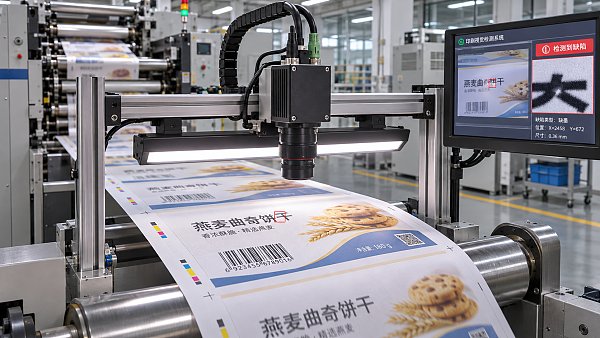
Before comparing prices, define the inspection task in commercial terms: which defects must be detected, across what area, at what line speed, and what happens when the system identifies a problem. Checking whether a code is present on a folding carton is not equivalent to comparing the entire printed surface against an approved reference.
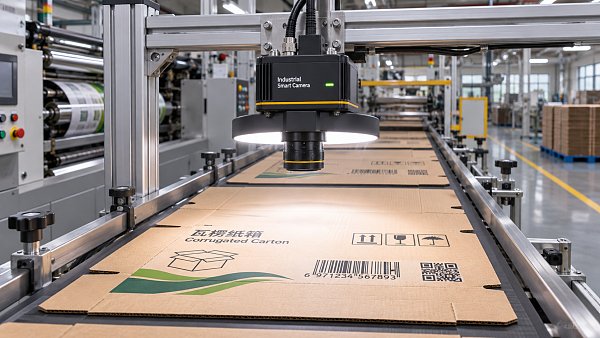
That distinction matters particularly on wide corrugated sheets. A camera capable of reading a code in a small, controlled area may lack the resolution or processing capacity to detect small print defects across the sheet width. Full-width inspection may require multiple cameras or a different imaging architecture, including line-scan equipment. An inexpensive device that cannot meet the coverage requirement is not a lower-cost alternative.
Comparable quotations should separate the following costs rather than combine them into an unexplained “vision system” total:
For imported equipment, the installed-cost comparison also needs a consistent treatment of freight, duties, nonrecoverable taxes, travel, and local commissioning support. Quotations in different currencies should use an explicit exchange-rate assumption rather than mixing current hardware prices with unadjusted future service payments.
How a cheaper camera can increase operating costs
The most important technical limitations are those that create a measurable operating consequence. Higher resolution or faster processing is not inherently valuable; it becomes valuable when it prevents additional hardware, speed restrictions, missed defects, or excessive false rejects.
Consider motion blur. At production speed, the exposure must be short enough to preserve the detail being inspected. Achieving that can require suitable lighting and optics, not simply more pixels. If a quotation excludes the illumination needed for the actual substrate and speed, the apparent camera saving understates the cost of obtaining a usable image.
Printed surfaces also create different inspection conditions. Corrugated board can introduce variation in flatness and positioning; coated or varnished cartons can produce reflections. A system must distinguish acceptable process variation from defects that require action. Otherwise, operators face a choice between rejecting acceptable output and loosening settings enough to let defects pass.
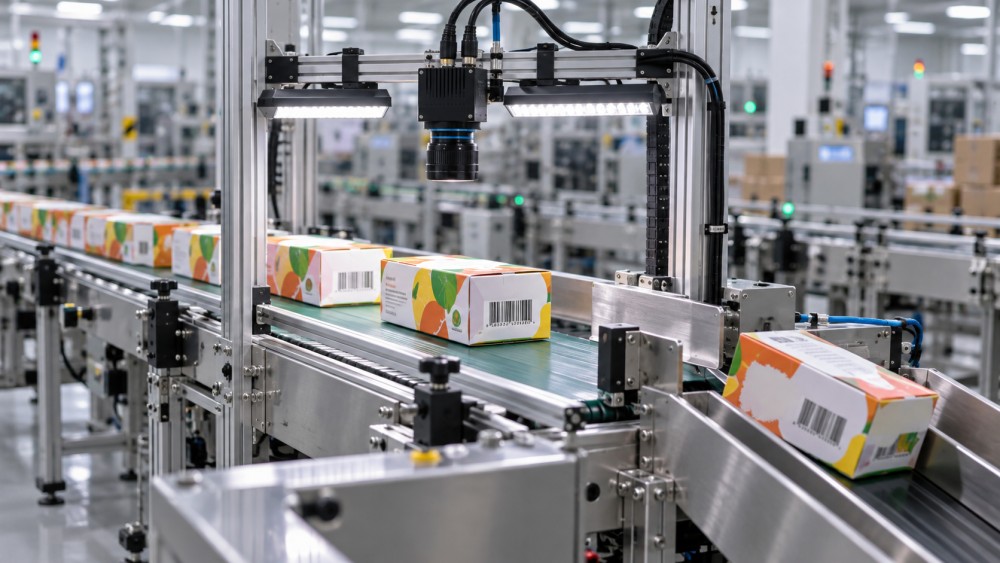
False rejects are an operating expense, not just a technical statistic. Their cost depends on what happens next. Automatically discarded cartons consume material and conversion effort. Segregated sheets may require manual review and reinsertion. Repeated alarms can interrupt production even when the product is acceptable.
Missed defects create a different exposure: additional conversion of defective material, sorting, reprints, replacement deliveries, and customer claims. These losses should not be treated as fully recoverable simply because a camera is installed. Detection capability must be demonstrated for the relevant defect types, and the line must respond correctly.
Inspection location changes the economics as well. Detection immediately after printing may prevent further processing of defective sheets. Detection after die-cutting or folding captures quality later, when more value has already been added. Both positions can be justified, but their waste-reduction assumptions should not be interchangeable.
Build a cost model that separates expenditure from benefits
A useful ownership model starts with installed capital cost, adds operating and support costs over a defined evaluation period, and includes replacement expenditure where relevant. Residual value can be deducted if there is a defensible basis for it. Production losses caused by the inspection system also belong in the model.
Lifecycle ownership cost = installed investment + operating and support costs + inspection-induced losses + replacement costs − residual value.
Avoided waste, rework, and claims should then be assessed separately as benefits. Keeping the two sides visible makes it harder to hide weak savings assumptions inside an attractive net-cost figure.
The baseline should reflect losses the proposed system can actually influence. If waste records combine print defects with damaged board, feeding problems, and die-cutting faults, assigning the entire waste total to print inspection overstates the opportunity. Even within print-related waste, some losses occur before the camera can trigger a useful response.
Labor savings require similar discipline. Reducing manual sampling does not necessarily reduce payroll. Cash savings arise when overtime, temporary labor, or staffing expenditure is genuinely avoided. Time released for other work can have operational value, but it should be identified separately from cash savings.
Capacity benefits also need evidence. Fewer interruptions may release productive hours, but those hours generate incremental contribution only if the plant can sell and produce additional work without another bottleneck preventing delivery. Valuing every released hour at the press’s sales revenue would exaggerate the return.
An illustrative comparison: higher purchase price, lower net cost
The following figures are hypothetical calculation inputs, not market prices or measured performance. Both options are assumed to meet the same mandatory inspection requirements. Option B is assumed to deliver fewer false rejects and better detection of financially significant defects, with those differences requiring validation before approval.
The calculation assumes immediate, constant annual benefits, no residual value, and no discounting or tax effects. Option B has a higher ownership cost but produces a better economic result because its assumed benefits exceed the additional expenditure. Its extra $24,000 investment generates $15,000 more annual net benefit, giving an incremental simple payback of 1.6 years.
That conclusion depends on the performance difference being real. If both systems deliver identical inspection outcomes and operating costs, paying more for Option B has no financial justification. A premium needs a measurable source of value, not a broader feature list.
For approval, dated cash flows should replace the simplified annual model. Installation delays, commissioning losses, and a gradual production ramp can materially change payback. Net present value should use the organization’s approved discount rate and consistent tax treatment. Depreciation affects accounting results and potentially taxes; it should not be added as a second cash outflow on top of the purchase payment.
Validate the assumptions that can reverse the decision
A demonstration on selected samples is not sufficient evidence for an annual savings forecast. Acceptance conditions need to cover representative substrates, print designs, job changes, positioning variation, and production speeds. The relevant question is whether detection and rejection remain reliable under the agreed operating conditions.
Critical defects should have separate acceptance criteria. An overall accuracy percentage can conceal weak performance on a rare but costly error, such as an incorrect printed code. Known-defect challenges help test detection capability, while sustained production trials help establish false-reject behavior. Neither alone establishes every aspect of long-term performance.
The response chain also needs testing: detection, item tracking, reject activation, and confirmation that the correct item was removed. Unconfirmed rejects or lost tracking should trigger an agreed response rather than silently allowing uncertain product to continue.
Financial sensitivity testing should concentrate on uncertain variables with large consequences. If the investment depends on avoiding customer claims, test a case with substantially lower claim savings. If frequent short runs dominate production, include recipe setup and validation time. If uptime drives the return, include the cost and duration of realistic support and replacement arrangements.
Rare, high-value losses deserve separate treatment. Avoiding a major customer incident may strengthen the risk case, but an uncertain event should not be presented as a guaranteed annual saving. Distinguishing routine operating savings from risk reduction produces a more credible approval case.
Buy a defined inspection outcome, not an unspecified capability
Commercial terms should connect payment and acceptance to the agreed inspection scope. The contract should identify production conditions, defect categories, false-reject limits, response behavior, and responsibility for integration. It should also state which licenses remain usable without subscription renewal and which services or features stop.
Data retention can create additional costs if the system stores images, inspection results, or traceability records. Required retention periods, storage capacity, retrieval functions, and export access should be priced explicitly. Likewise, adding a camera later may trigger new software, processing, or engineering charges rather than only another hardware purchase.
A lower smart camera price is meaningful when the complete system meets the required task with fewer lifecycle costs. A higher price is justified only when verified performance, simpler implementation, or lower operating losses outweigh the premium. The defensible purchase is the one whose installed scope, acceptance evidence, and cash-flow assumptions remain sound even when optimistic savings are removed.
Related News
 How Do Inline Glue Detection Systems Find Missing Glue?Discover how inline glue detection systems identify missing adhesive, prevent defective cartons from reaching customers, and support reliable quality control.Machine Vision & Coding Fellow
 How Does an Automatic Defect Detection System Inspect Print?Discover how an automatic defect detection system inspects print, identifies flaws, checks codes, and helps manufacturers improve quality control.Machine Vision & Coding Fellow
 How Can an AI Smart Camera Detect Defects in Printed Packaging?Discover how an AI smart camera detects printed packaging defects and what it takes to deliver reliable inspection at production speed.Machine Vision & Coding Fellow
 How to Choose a Pharmaceutical Carton Inspection SupplierChoose a pharmaceutical carton inspection supplier with confidence. Compare detection performance, integration, validation support, service, and lifecycle costs.Machine Vision & Coding Fellow
 How Color Inspection Systems Detect Print Color VariationsColor Inspection Systems detect print variations through imaging and measurement. Discover how references, tolerances, and setup improve quality control.Machine Vision & Coding Fellow
 How to Set Up an Inspection Camera for Print Quality ControlSet up an inspection camera for print quality control with practical tips on lighting, focus, triggers, and defect detection. Learn how to reduce false rejects and validate results at production speed.Machine Vision & Coding Fellow