How Automatic Defect Detection System Cuts Print Waste and Rework
How Automatic Defect Detection System Cuts Print Waste and Rework
In high-speed commercial printing and corrugated packaging, defects rarely stay small for long. A weak barcode, a color shift, a missing code, or a registration drift may start with a few sheets, then spread across a full run before anyone at the delivery end can react. By that point, the real cost is not just spoiled material. It includes machine time, labor for sorting, urgent reruns, delayed shipment, and sometimes customer claims.
That is why an automatic defect detection system has become more than a nice add-on for quality teams. In many plants, it is now part of the basic control logic for print stability and traceability. The value is practical: detect problems inline, isolate risk earlier, and stop defects from turning into batch-level waste.
In packaging and print operations, the conversation has also changed. Buyers no longer judge equipment only by rated speed or purchase price. They look at uptime, changeover efficiency, material utilization, inspection reliability, operator dependence, and total operating cost. That broader view is exactly why platforms such as CPCS focus not only on presses and converting machines, but also on vision inspection equipment, coding systems, end-of-line automation, and digital production management across the packaging factory.
What the system is really solving
Manual inspection still has a place, especially for sampling, approval, and root-cause review. But it struggles in the conditions where most print waste happens: high speed, long runs, frequent job changes, multiple SKUs, and visually subtle defects. Operators get tired. Lighting changes. The same flaw is judged differently across shifts. And on corrugated or paper-based packaging lines, board surface variation can make borderline defects harder to catch consistently.
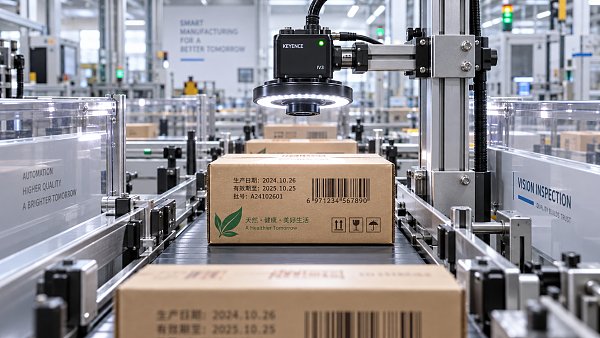
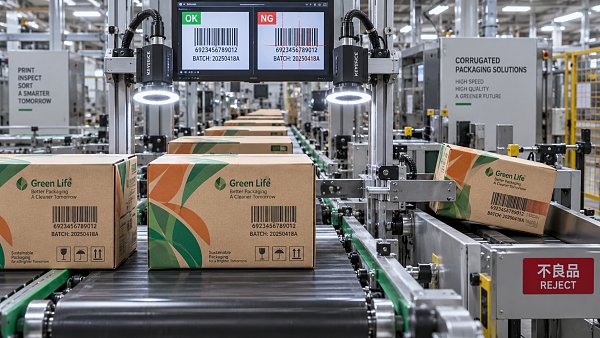
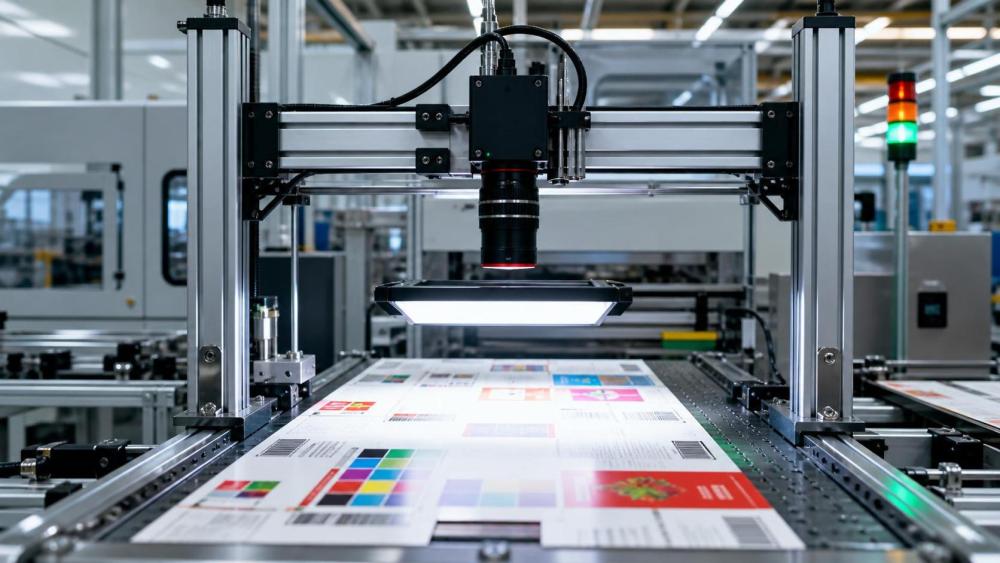
An automatic defect detection system uses cameras, lighting, image processing, and comparison rules to inspect every repeat or every sheet in motion. Depending on the application, it may look for registration error, color deviation, hickeys, streaks, splash marks, print voids, missing text, wrong artwork, unreadable barcodes, variable data errors, or surface contamination. In folding carton and corrugated work, the system may also help confirm that printed areas align correctly with later converting steps such as die-cutting, creasing, gluing, or coding.
The important point is not that cameras see everything perfectly. They do not. The point is that automated inspection makes defect detection continuous, repeatable, and fast enough to support real production decisions.
Why waste and rework often begin earlier than teams think
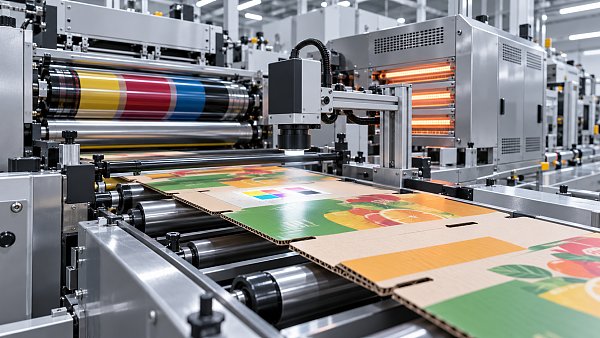
Many factories still treat rework as a finishing-stage problem. In reality, a large share of waste starts upstream, often during setup, acceleration, order changeover, or after a small process disturbance. Ink viscosity shifts, anilox contamination, doctor blade wear, substrate variation, tension instability, curing inconsistency, and print plate issues can all create defects before anyone notices a pattern.
On corrugated packaging lines, the challenge becomes even more layered. Board flatness, flute profile, moisture balance, and sheet transport behavior can affect print presentation and code readability. A print issue may not look serious at the press, then become critical when the box is folded, scanned, stacked, or shipped through an automated logistics chain.
This is where inline inspection changes the economics. Instead of discovering defects at pallet discharge, warehouse release, or customer receiving, the plant gets an earlier warning while corrective action is still possible.
How the reduction in waste actually happens
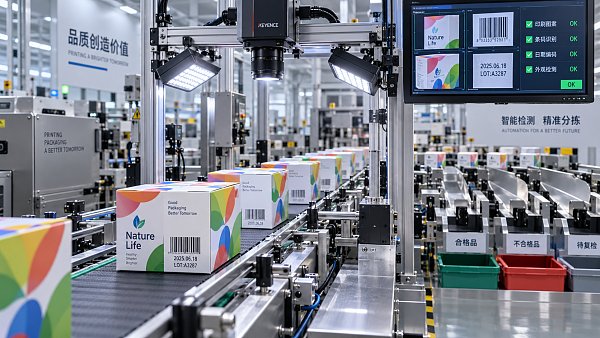
The most direct saving comes from containment. If a vision system flags a repeated defect after a short interval, the operator can stop, adjust, clean, or reject a narrow section of production instead of sorting a full batch later. Even when the press keeps running, the system can mark suspect output for downstream separation.
A second saving comes from pattern recognition. Rework often grows because teams respond to symptoms, not causes. When inspection data shows exactly when the defect began, how often it repeats, and whether it tracks a print cylinder, nozzle, lane, or sheet position, maintenance and quality staff can troubleshoot faster. That reduces the “trial-and-error waste” many plants accept as normal during problem solving.
The third saving is procedural. In plants handling food, pharma, retail-ready packaging, or e-commerce shipping cartons, traceability matters almost as much as appearance. If the system verifies codes, serial marks, or variable print content inline, the factory lowers the chance of mixed batches or missing identification. Preventing one traceability failure can matter more than reducing a few percentage points of scrap.
Typical defect categories with high cost impact
Where quality and safety teams should look beyond the camera spec
When plants evaluate an automatic defect detection system, they often start with resolution, line speed, and defect library. Those matter, but they are not enough. A system that performs well in a demo may disappoint on the factory floor if the project team ignores substrate variability, lighting stability, data handling, and alarm logic.
For quality control teams, the practical questions are usually these: What defect types must never escape? Which ones are tolerable within defined limits? How should the system distinguish between cosmetic variation and true nonconformance? Can it store inspection images tied to job data for later review? Can suspect material be tracked to pile, pallet, or order number? Those decisions determine whether the system becomes a useful control tool or just another source of alarms.
Safety and compliance managers often focus on a different layer. If coding or traceability is part of the print process, the inspection system may need to confirm content integrity, not just print presence. In regulated or brand-sensitive applications, image records, audit trails, and integration with production management systems can matter as much as defect detection accuracy.
Integration matters more than standalone detection
The strongest results usually come when inspection is connected to the rest of the line. On a flexographic press, that may mean linking defect alarms to registration control, print repeat data, or job recipe settings. In corrugated and folding carton production, it may mean passing defect information downstream to reject handling, stack marking, coding verification, or pallet identification.
This broader, system-based view is becoming more common across packaging plants. CPCS follows that shift closely because users increasingly need to understand how presses, converting machines, coding systems, vision inspection, robotic handling, and production software work together rather than as isolated purchases. A good inspection setup is rarely just a camera purchase. It is part of a plant control strategy.
In shorter-run environments with frequent order changes, integration also helps reduce setup loss. If inspection parameters can be recalled by job, the line reaches stable output faster and avoids repeating the same mistakes from one shift to the next.
Common mistakes during selection and implementation
One common mistake is trying to inspect everything at once. Plants sometimes ask one system to catch cosmetic print defects, verify all codes, confirm artwork version, and support full traceability from day one. That may be possible, but not always practical. It is often better to start with the defects that create the highest cost or the highest customer risk.
Another mistake is underestimating reference setup and tolerance management. If acceptance thresholds are too tight, operators stop trusting the alarms. If they are too loose, escapes continue. The right balance usually depends on substrate, print process, customer standards, and whether the defect affects function, compliance, or appearance.
Plants also run into trouble when they buy inspection without planning response rules. What happens after detection: stop the line, mark the batch, reject automatically, or notify quality for review? Without clear escalation logic, even a technically capable system may fail to reduce rework in practice.
What a realistic evaluation should include
A sensible evaluation usually looks at the full operating context: product mix, substrate range, minimum defect size of concern, code types, line speed variation, cleaning routine, lighting conditions, operator skill level, and data retention needs. It should also include the less visible parts of ownership such as calibration, false reject handling, spare parts, software support, and compatibility with existing MES or production reporting tools.
For packaging producers comparing solutions, a useful next step is often to map defect cost by process stage rather than by department. A defect found at print discharge has one cost. The same defect found after die-cutting, gluing, palletizing, or customer delivery has a very different cost. That simple exercise often clarifies where inspection should be installed and what level of automation is justified.
No system eliminates waste completely, and no supplier should promise that. But in modern commercial print and corrugated packaging, waiting for defects to show up downstream is usually the more expensive option. If the plant is already dealing with recurring rework, code verification failures, or unstable print quality during job changes, the real question is not whether automated inspection is relevant. It is which defect risks need to be controlled first, and how tightly the inspection system should be tied to production, traceability, and quality release.
For teams reviewing investment or upgrade plans, that is where structured technical information helps most: not in generic claims, but in understanding machine fit, process limits, integration demands, and the operational trade-offs behind cleaner output and fewer reruns.
Related News
 How to Build a Reliable Compact Vision Sensor Inspection SystemBuild a reliable compact vision sensor inspection system with proven guidance on lighting, triggering, defect detection, and production-ready quality control.Machine Vision & Coding Fellow
 How High Accuracy Spectrophotometers Improve Print Color Controlhigh accuracy spectrophotometers help print and packaging teams detect color drift early, reduce waste, improve approvals, and protect brand consistency across every production run.Machine Vision & Coding Fellow
 How Spectrophotometers for Color Matching Improve Print ConsistencySpectrophotometers for color matching help printers control Delta E, reduce waste, and deliver reliable brand color across every press run.Machine Vision & Coding Fellow
 How Print Inspection Systems Prevent Defects Before ShipmentPrint Inspection Systems help detect print, barcode, color, and coding defects in real time—improving traceability, reducing waste, and preventing costly shipment failures.Machine Vision & Coding Fellow
 Smart Cameras for Inspection That Catch Print Defects in Real TimeSmart camera for inspection solutions catch print defects in real time, verify codes, reduce false rejects, and strengthen packaging quality control.Machine Vision & Coding Fellow
 How Color Sensors Support Reliable Inline Print Quality InspectionColor Sensors enable reliable inline print quality inspection, helping packaging plants detect color drift early, reduce waste, protect brand consistency, and improve traceability.Machine Vision & Coding Fellow