Glue Inspection Systems in Packaging: How They Detect Missing or Weak Bonds
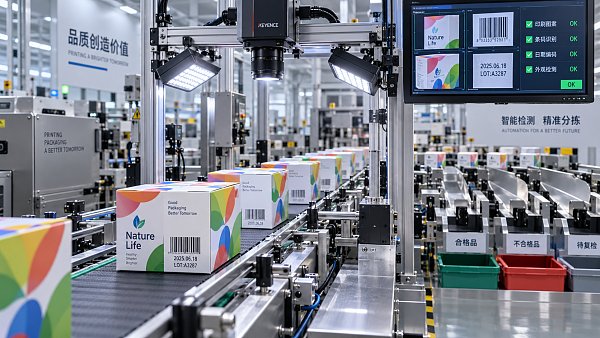
In high-speed packaging lines, even a tiny adhesive failure can trigger carton opens, product loss, and costly recalls. Glue Inspection Systems help quality and safety teams detect missing or weak bonds in real time, ensuring every box leaves the folder gluer with reliable seal integrity. For operations focused on OEE, waste reduction, and compliance, these systems are no longer optional—they are a frontline defense against hidden bonding defects.
For quality and safety teams, the issue is not whether glue is being applied somewhere on the carton. The real question is whether the bond will still hold after compression, vibration, climate change, pallet stacking, transport abuse, and end-user handling. That distinction matters. Many packaging failures are not dramatic machine breakdowns; they are small, intermittent bonding defects that slip through production and only appear later in logistics or on the retail shelf.
That is why Glue Inspection Systems have become increasingly important in folding carton, corrugated secondary packaging, and high-speed e-commerce formats. They sit at the intersection of process control, defect prevention, and shipment integrity. Their value is less about “seeing glue” in a general sense and more about reducing uncertainty in one of the least forgiving steps of package conversion.
Why adhesive defects are hard to control on modern packaging lines
Folder gluers and related end-of-line systems run fast enough that traditional manual checking can only sample outcomes, not control the process. A line may produce thousands of cartons per hour, while glue application itself happens in milliseconds. In that environment, several defect modes can occur without obvious visual warning:
- missing glue lines or dots caused by nozzle blockage or misfire;
- incomplete patterns due to pressure fluctuation or poor triggering;
- glue applied in the wrong position because of carton skew or registration drift;
- bond weakness caused by insufficient adhesive volume, contamination, or substrate incompatibility;
- open flaps or unsealed side seams caused by compression timing or folding geometry rather than glue absence alone.
From a quality perspective, this is what makes adhesive control deceptively difficult. A carton can appear acceptable as it exits the compression section but still fail downstream. In corrugated and carton converting, bond integrity depends not only on adhesive presence but on the interaction of substrate surface, machine timing, bead placement, set time, and compression dwell.
That is also why “operator checks every 30 minutes” is no longer a sufficient quality strategy in many applications, especially where packaging performance is tied to product safety, tamper evidence, transport stability, or regulated traceability.
What Glue Inspection Systems actually inspect
The term covers more than one technology. In practice, Glue Inspection Systems are used to verify one or more of the following:
- presence or absence of adhesive;
- position of the glue pattern relative to carton features;
- continuity of glue lines or dot sequences;
- approximate size, width, or coverage of the applied bead;
- closed-carton seal condition after folding and compression;
- in some systems, indirect indicators of bond quality through pattern consistency and package geometry.
Not every system can directly measure bond strength. That is an important limitation to understand early. Most inline solutions detect process indicators correlated with good bonding, rather than performing destructive bond tests on every pack. They reduce risk by identifying the most common precursors of failure before weakly bonded cartons leave the machine.
This distinction is essential for safety and quality managers. A camera can confirm that glue was applied in the right place, but it cannot always prove that the adhesive chemically anchored to a difficult coated board surface under current humidity and compression conditions. Inline inspection is therefore strongest when it is treated as part of a layered quality system, not as a stand-alone guarantee.
How missing glue is typically detected
The easiest defect to understand is total or partial glue absence. Detection here often relies on optical, ultraviolet, infrared, or sensor-based methods, depending on adhesive type and machine configuration.
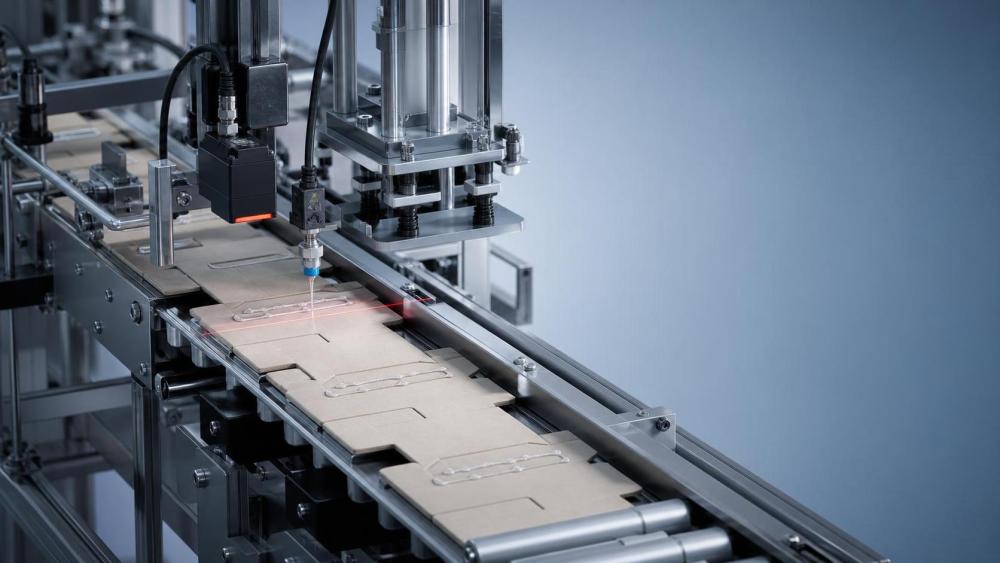
Camera-based systems are common where adhesive contrast can be made visible, either naturally or through illumination strategy. If the glue reflects light differently from the substrate, the system can compare the observed pattern against a taught reference. In other cases, UV-traceable adhesives or additives make the glue easier to detect under dedicated lighting. Some systems use sensors mounted near application points to confirm each shot or bead event from the gun, though this only verifies dispensing activity, not the final pattern on the carton.
In practical terms, missing-glue detection is often built around three questions:
- Did the gun fire when commanded?
- Is glue physically present on the substrate?
- Is the pattern present in the correct location and length?
Those questions sound simple, but the difference between them is operationally significant. A gun can fire without delivering usable adhesive. A visible mark can exist but be off-position. A correct-looking bead can still be too short to survive compression stress at the carton seam.
Quality teams that only ask for “glue detection” sometimes underestimate this. The more useful specification is defect coverage: exactly which failure modes the system must reliably catch on the actual substrates and carton styles being run.
How systems identify weak or unreliable bonds
Weak bonds are more difficult than missing bonds because they are not always directly visible. In packaging operations, weak bonding usually emerges from one or more process deviations:
- low adhesive volume;
- poor wetting on coated, dusty, or varnished surfaces;
- incorrect adhesive temperature or viscosity;
- compression pressure or dwell time outside target range;
- machine speed exceeding the adhesive’s practical setting window;
- substrate variation, especially with recycled fiber content or challenging barrier layers.
Most Glue Inspection Systems infer this risk indirectly. They may measure bead width, dot size, pattern continuity, or glue location relative to fold lines and seam areas. They may also inspect the finished carton after closing to see whether flaps are fully seated, seams are aligned, and the structure remains closed through the discharge section.
Some advanced lines combine glue pattern inspection with carton geometry inspection. This matters because a weak bond often reveals itself as a mechanical symptom: lifting flap edges, spring-back, poor seam flatness, or inconsistent compression outcome. In other words, the system is not only looking at adhesive application but also at whether the pack behaves like a correctly bonded pack.
For high-risk packaging, destructive offline tests still remain necessary. Peel tests, compression checks, burst handling simulation, or transit validation may be required to confirm true seal performance. Inline inspection narrows the defect window; it does not fully replace validation of adhesive-substrate compatibility.
The main technologies used on packaging lines
There is no single standard architecture. The right solution depends on packaging format, adhesive chemistry, machine speed, and the level of risk attached to a failed bond.
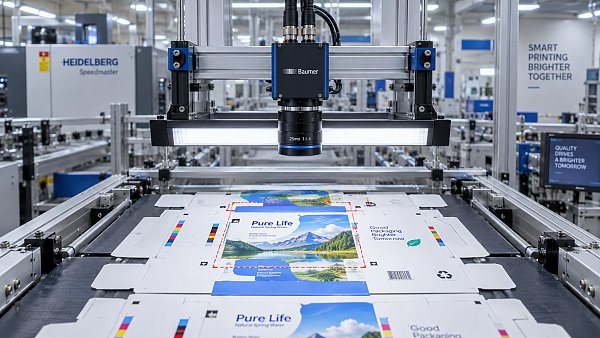
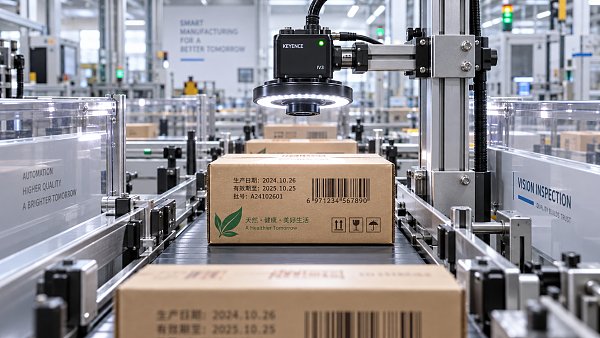
Vision-based inspection is the most widely recognized approach. Cameras inspect adhesive presence, pattern shape, and placement before or after folding. This is especially effective when carton orientation is stable and lighting can be controlled.
UV-assisted glue detection is used when the adhesive itself is hard to distinguish from the board. Under UV illumination, marked adhesive becomes more detectable. The trade-off is dependence on compatible chemistry and stable illumination conditions.
Sensor confirmation at the gun can verify that a valve actuated or a pressure event occurred. This is useful for process monitoring but weaker as a final quality check, because it does not always confirm transfer to substrate.
Post-fold seal inspection focuses on the final carton condition. This is valuable in real production because the customer experiences the finished package, not the adhesive bead in isolation. A clean glue line means little if flap closure is incomplete.
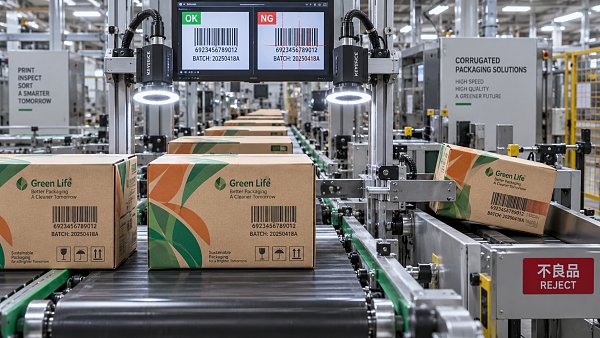
Integrated reject systems are not a detection technology by themselves, but they are critical. If a defect is found, the line must reliably separate the carton without creating jams or allowing suspect packs to mix back into good output.
Where false confidence often comes from
A common misunderstanding is that installing Glue Inspection Systems automatically eliminates adhesive risk. In reality, poor setup can create a dangerous form of false confidence.
Several issues are common in the field:
- inspection tuned only for ideal board color, then weakened by production variation;
- system validated on straight-line cartons but not on complex crash-lock or multi-point gluing styles;
- acceptance thresholds set too loosely to avoid nuisance rejects;
- focus placed on glue presence while ignoring compression and folding dynamics;
- changeovers introducing registration shifts that inspection recipes do not catch quickly enough.
For safety and quality functions, the lesson is clear: detection capability must be proven against known defect scenarios, not assumed from vendor terminology. A system should be challenged with intentionally induced faults such as blocked nozzles, reduced pressure, shifted blanks, or low-glue-volume conditions. If those tests are not part of commissioning, the actual protection level remains uncertain.
Why this matters more now than it did a decade ago
Packaging plants are operating under tighter tolerances than before. E-commerce distribution exposes boxes to more handling points. Lightweighting can reduce material margin. Sustainable packaging goals are pushing broader use of recycled fiber and new barrier structures, both of which can alter adhesive behavior. At the same time, labor constraints make sustained manual inspection harder to maintain.
Regulatory pressure is also raising the cost of failure in some sectors. In food, pharma, personal care, and consumer goods, a carton that opens in distribution is not just a scrap issue. It can become a contamination concern, a tamper concern, a branding issue, or a traceability problem if labels, leaflets, or serialized identifiers are lost or separated.
That broader risk picture is one reason glue inspection has moved from a “nice-to-have automation option” toward a standard quality expectation on many high-speed lines.
What quality and safety teams should evaluate before approving a system
The most useful evaluation does not start with camera resolution or software features. It starts with failure consequences.
If a bond failure leads only to internal rework, the control strategy can be lighter. If it can trigger customer complaints, transport collapse, product exposure, or recall exposure, then defect detection sensitivity and evidence logging become far more important.
Key evaluation points include:
- Defect criticality: What happens if one weak seam escapes?
- Carton variety: How many SKUs, sizes, coatings, and glue patterns must be managed?
- Line speed: Can the system maintain detection performance at maximum real production speed, not just nominal speed?
- Adhesive compatibility: Does the method work with the adhesives actually used, including future substitutions?
- Changeover robustness: How recipe-driven is the setup, and how vulnerable is it to operator error?
- Reject verification: Is every failed pack positively removed and recorded?
- Data traceability: Can events be logged for audits, root-cause analysis, and customer investigations?
For plants serving export markets or regulated customers, traceable records can be almost as important as the inspection event itself. When a complaint arises, the ability to show line-condition history, reject statistics, and alarm response can materially change the outcome of an investigation.
Implementation is usually a process-control project, not just an equipment install
Many underperforming installations fail for organizational rather than technical reasons. Glue inspection only works well when machine settings, adhesive management, maintenance discipline, and operator response procedures are aligned.
That means quality teams should pay attention to upstream control points:
- adhesive storage and handling conditions;
- scheduled cleaning of guns, nozzles, and filters;
- board dust management;
- verification of compression section settings;
- start-up approval routines after wash-ups or changeovers;
- clear escalation rules when alarms repeat.
A strong system does more than reject bad cartons. It helps reveal the process pattern behind the defects: one nozzle drifting on long runs, one SKU sensitive to humidity, one shift creating more glue alarms after speed increases. This is where Glue Inspection Systems contribute to OEE as well as quality. They reduce hidden waste, shorten troubleshooting time, and make recurring instability visible.
What these systems can and cannot promise
They can significantly reduce the probability of shipping cartons with missing adhesive, misplaced glue patterns, and some forms of closure-related bond weakness. They can improve line transparency and support faster intervention. They can also strengthen compliance culture by turning adhesive application from a sampled assumption into a monitored process.
They cannot remove the need for adhesive qualification, substrate testing, maintenance discipline, and periodic destructive verification. They also cannot compensate for fundamentally poor carton design or adhesive mismatch. If the packaging format itself is operating too close to failure margin, inspection will expose the instability but not solve its root cause.
For quality and safety management, that is the right way to frame the technology: not as a guarantee of perfect bonds, but as a high-value control layer that catches defects early, documents risk, and supports more reliable packaging decisions in increasingly demanding production environments.
As packaging lines become faster, substrates more variable, and failure costs less tolerable, the practical question is no longer whether bond defects exist. It is whether the plant can detect them before the market does.
Related News
 How to Select an Area Scan Camera for Reliable Print InspectionChoose an area scan camera for print inspection with confidence. Learn how resolution, lighting, speed, and testing affect defect detection—and make a smarter investment.Machine Vision & Coding Fellow
 How to Build a Reliable Compact Vision Sensor Inspection SystemBuild a reliable compact vision sensor inspection system with proven guidance on lighting, triggering, defect detection, and production-ready quality control.Machine Vision & Coding Fellow
 How High Accuracy Spectrophotometers Improve Print Color Controlhigh accuracy spectrophotometers help print and packaging teams detect color drift early, reduce waste, improve approvals, and protect brand consistency across every production run.Machine Vision & Coding Fellow
 How Spectrophotometers for Color Matching Improve Print ConsistencySpectrophotometers for color matching help printers control Delta E, reduce waste, and deliver reliable brand color across every press run.Machine Vision & Coding Fellow
 How Print Inspection Systems Prevent Defects Before ShipmentPrint Inspection Systems help detect print, barcode, color, and coding defects in real time—improving traceability, reducing waste, and preventing costly shipment failures.Machine Vision & Coding Fellow
 Smart Cameras for Inspection That Catch Print Defects in Real TimeSmart camera for inspection solutions catch print defects in real time, verify codes, reduce false rejects, and strengthen packaging quality control.Machine Vision & Coding Fellow