Digital Color Measurement Systems That Improve Print Consistency Fast
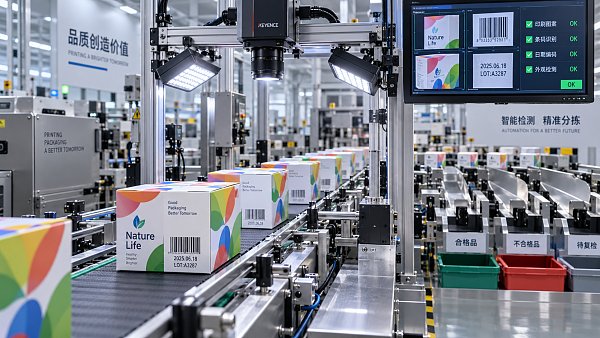
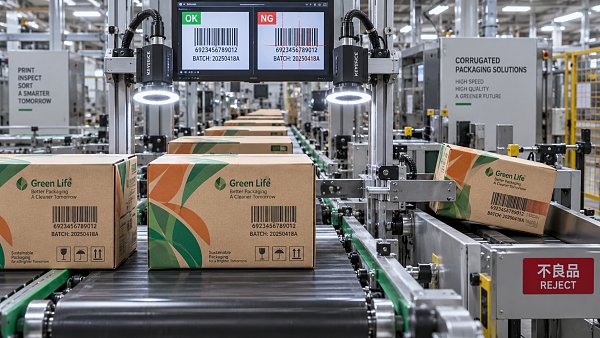
When a print run drifts out of color, the problem rarely stays on the sheet. In packaging and commercial print environments, color inconsistency can trigger rejected batches, barcode scanning issues, customer complaints, traceability questions, and unnecessary waste. For quality control and safety teams, that makes color less of a design matter and more of a production control issue. This is why digital color measurement systems are moving from “nice to have” tools into the core of modern print quality management.
What makes these systems valuable is not just that they measure color. It is that they turn color from a subjective judgment into a repeatable operating standard. Instead of relying on whether an experienced press operator thinks a blue “looks close enough,” a digital system compares actual print output against defined targets, tolerance windows, and job standards. That change alone can shorten decision time on press, reduce arguments between shifts, and make repeat orders easier to control.
In corrugated packaging, folding cartons, labels, and commercial print, the pressure is growing from every side: shorter runs, faster delivery, more SKUs, tighter brand expectations, and higher demands for process traceability. Under those conditions, manual visual checks are simply not enough. Lighting varies. Operators vary. Substrates vary. Even the same job can behave differently across machines, ink batches, or humidity conditions. A digital method brings discipline where visual review often brings inconsistency.
Why print consistency has become a quality and compliance issue
It is easy to treat color as a customer-facing aesthetic issue, but on the factory floor it affects much more than appearance. In pharmaceutical cartons, incorrect color can raise concerns about pack identification and product mix-up risk. In food packaging, brand color drift may not create a direct safety event, but it can still trigger nonconformance, retailer complaints, and expensive rework. In logistics and corrugated transit packaging, poor print contrast may affect coding visibility, inspection performance, or scan reliability.
Quality teams are often the group that sees the full cost of inconsistency. They review customer complaints, isolate root causes, manage retained samples, compare repeat jobs, and explain why one production shift passed while another did not. Without an objective measurement system, that process becomes slow and frustrating. Teams spend too much time debating whether a result is acceptable instead of verifying why it changed.
Digital color measurement systems support a more controlled approach by linking color evaluation to standard values such as LAB targets, density, dot gain, gray balance, and ΔE tolerances, depending on the print process and customer requirement. For QC and safety managers, the real gain is not only better measurement accuracy. It is better operational clarity.
What digital color measurement systems actually do on the production floor
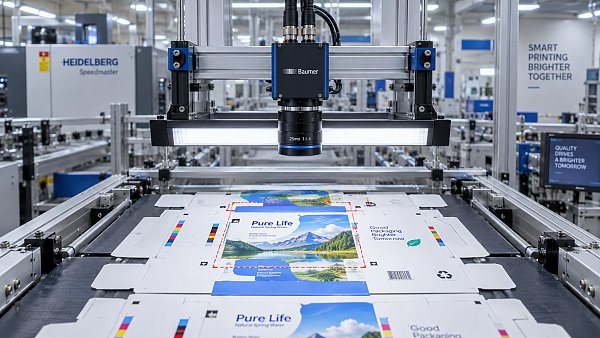
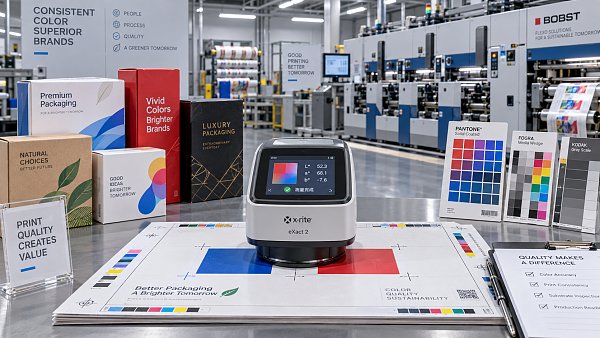
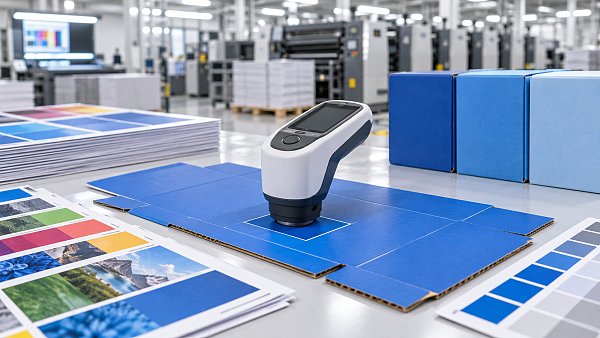
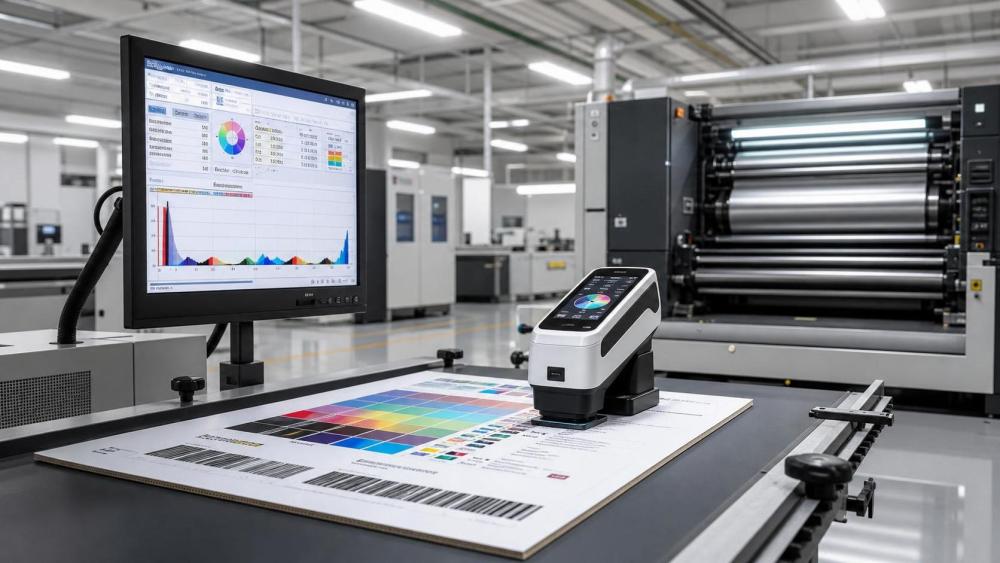
The term covers more than one device type. In practice, it may include handheld spectrophotometers, inline scanning systems, press-side measurement stations, automated color bars, software for target management, and reporting tools that store job history. Some systems focus on spot checks during make-ready. Others support continuous monitoring during production. The right configuration depends on run length, substrate variation, process stability, and the level of control the plant wants to achieve.
At the simplest level, a digital system captures measured color values from printed samples and compares them with approved standards. At a more advanced level, it can connect measurement, approval, press adjustment, and documentation into one controlled workflow. That matters in plants where flexographic presses, offset presses, digital devices, and converting lines all interact with different ink sets, drying behaviors, and substrate responses.
For corrugated packaging producers especially, measurement must account for a difficult print environment. Liner variability, flute influence, ink absorption, press speed, and board surface conditions all affect the final result. A color measurement system does not remove those variables, but it helps teams see them faster and respond before the job moves too far out of tolerance.
Where these systems improve consistency fastest
The biggest gains often appear in the moments where production is most unstable: job setup, shift change, repeat order restart, and substrate change. These are the points where visual checks tend to fail because memory replaces measurement.
During make-ready, digital measurement shortens the path to target color. Instead of repeated print-and-look cycles, operators can measure against a stored standard and adjust ink, impression, or process settings with more confidence. That reduces setup sheets and improves the chance of reaching saleable output sooner.
Across shifts, the system creates consistency between teams. One operator’s “acceptable red” is often not the next operator’s red. A shared numerical target reduces that variation. For QC managers, this is especially useful when investigating why the first half of a run passed and the second half triggered complaints.
On repeat jobs, archived color data becomes a practical advantage. Instead of rebuilding color by memory or by matching a retained sample under uncertain lighting, the plant can start from a documented target and prior measurement record. That supports repeatability, especially for brand packaging where visual drift from one order to the next is noticed immediately.
With variable substrates, digital measurement helps isolate whether the issue is ink, press setting, material behavior, or environmental condition. This matters in paper-based packaging where recycled content, surface finish, and absorbency can shift from batch to batch.
What quality control teams should standardize before buying equipment
A common mistake is to treat the device purchase as the starting point. In reality, the bigger question is how the plant defines acceptable color performance. If standards are vague, even a good measurement tool will produce confusion. Before selecting equipment, QC teams should clarify several points.
First, decide which color metrics actually matter for your products and customers. Not every operation needs the same measurement depth. A corrugated shipping box with simple branding may not need the same tolerance logic as premium consumer packaging or regulated pharmaceutical cartons. If the plant handles multiple categories, standards may need to be segmented by product type.
Second, define where measurement happens in the workflow. Is color checked only at startup? At fixed intervals? After roll changes? At shift handover? After maintenance events? Without clear checkpoints, data collection becomes irregular and hard to compare.
Third, determine who owns the approval decision. In some factories, operators measure but QC approves. In others, press teams self-correct within preset tolerance limits and escalate only when drift exceeds defined thresholds. The method matters because it affects response speed and accountability.
Fourth, confirm how data will be stored and retrieved. Measurement records are much more useful when linked to job number, substrate, ink set, machine, operator, and date. This creates a practical traceability trail rather than isolated readings that no one can use later.
Choosing a system for corrugated and commercial print applications
The best digital color measurement systems are not always the most complex ones. They are the ones that fit the actual process conditions of the plant. A high-volume corrugated facility running fast flexo jobs may prioritize ruggedness, speed, and simple operator guidance. A commercial printing company serving brand-sensitive work may place more weight on fine tolerance control, spot color management, and reporting depth.
For packaging producers, several selection questions are worth asking:
- Can the system handle the substrates we actually run, including kraft liners, coated stocks, recycled papers, or specialty materials?
- Is measurement fast enough for production pace, or will operators avoid using it because it slows the line?
- Can standards be stored by customer, SKU, or repeat job for practical retrieval?
- Does the software produce reports that support audits, complaint handling, and internal quality review?
- Will operators understand the interface quickly, or is the system too technical for routine use?
- Can it integrate with broader production data systems, inspection platforms, or digital job management workflows?
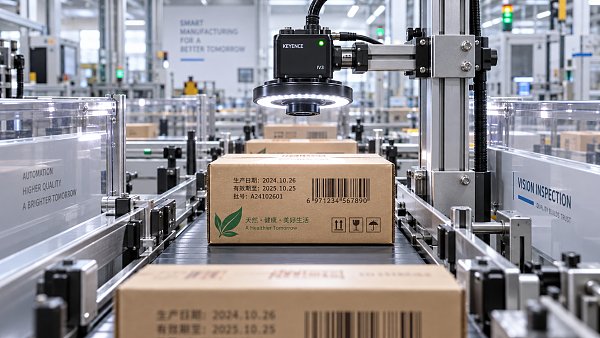
That last point is becoming more important. In modern packaging plants, color control no longer sits alone. It connects with vision inspection, coding verification, production reporting, and traceability systems. For companies evaluating broader automation or digital production management, color data becomes one more layer of process intelligence rather than a standalone quality check.
Common implementation problems that slow results
Plants often expect immediate improvement after installation, then become disappointed when habits do not change. The issue usually is not the instrument. It is the lack of process discipline around it.
One frequent problem is overcomplicating tolerances. If thresholds are unrealistic for the print method, substrate, or environment, operators will ignore the system because it appears to reject everything. Another is undertraining. When staff understand how to take a reading but not how to interpret it, measurement becomes a ritual rather than a control tool.
There is also a tendency to treat measurement as a final inspection step. That limits its value. The real benefit comes when data is used during production, not after defects have already accumulated. If readings are only reviewed at the end of a run, the plant gains documentation but not meaningful prevention.
Calibration discipline matters as well. A poorly maintained instrument can create false confidence or false alarms. QC managers should build routine verification into daily practice, especially in operations where environmental conditions and heavy use can affect measurement reliability.
How digital measurement supports safer and more stable operations
Safety teams may not always be the main users of color measurement devices, but they benefit from the control logic behind them. Stable print quality supports clearer coding, more dependable warning graphics, better legibility of handling information, and more reliable identification on secondary packaging. In regulated or high-accountability sectors, that contributes to operational risk reduction.
It also reduces the hidden safety burden created by rework. Every rejected batch introduces more handling, more material movement, more machine time, and often more schedule pressure. That raises the chance of rushed adjustments and procedural shortcuts. When color stays in control earlier, production becomes calmer and more predictable.
From a management perspective, the value is cumulative. Fewer disputes over visual approval. Faster root-cause review. Better repeatability across shifts and sites. More confidence when responding to customer complaints or audits. These are not abstract benefits; they affect daily plant behavior.
A practical direction for factories under pressure to do more with less waste
Packaging and commercial print operations are being asked to deliver tighter quality with less tolerance for scrap, delay, and inconsistency. In that environment, subjective color approval is a weak link. Digital color measurement systems provide a more reliable path: define the target, measure against it, react early, document the result, and repeat the method every time.
For companies in corrugated packaging, folding cartons, and commercial print, the question is no longer whether color should be measured digitally. The more useful question is how deeply the plant wants that measurement embedded into production control. Some facilities may begin with handheld verification for key jobs. Others may move toward integrated press-side measurement, linked reporting, and broader inspection workflows.
Either way, the direction is clear. When color is managed as data rather than opinion, print consistency improves faster, quality teams gain stronger control, and production decisions become easier to defend. For operations balancing compliance, customer expectations, and cost pressure, that is a practical advantage worth building into the process.
Related News
 How to Select an Area Scan Camera for Reliable Print InspectionChoose an area scan camera for print inspection with confidence. Learn how resolution, lighting, speed, and testing affect defect detection—and make a smarter investment.Machine Vision & Coding Fellow
 How to Build a Reliable Compact Vision Sensor Inspection SystemBuild a reliable compact vision sensor inspection system with proven guidance on lighting, triggering, defect detection, and production-ready quality control.Machine Vision & Coding Fellow
 How High Accuracy Spectrophotometers Improve Print Color Controlhigh accuracy spectrophotometers help print and packaging teams detect color drift early, reduce waste, improve approvals, and protect brand consistency across every production run.Machine Vision & Coding Fellow
 How Spectrophotometers for Color Matching Improve Print ConsistencySpectrophotometers for color matching help printers control Delta E, reduce waste, and deliver reliable brand color across every press run.Machine Vision & Coding Fellow
 How Print Inspection Systems Prevent Defects Before ShipmentPrint Inspection Systems help detect print, barcode, color, and coding defects in real time—improving traceability, reducing waste, and preventing costly shipment failures.Machine Vision & Coding Fellow
 Smart Cameras for Inspection That Catch Print Defects in Real TimeSmart camera for inspection solutions catch print defects in real time, verify codes, reduce false rejects, and strengthen packaging quality control.Machine Vision & Coding Fellow